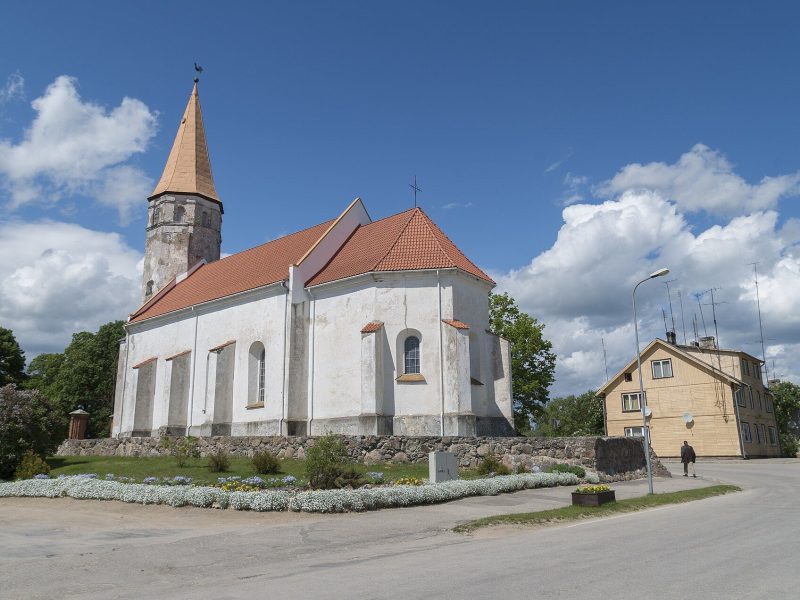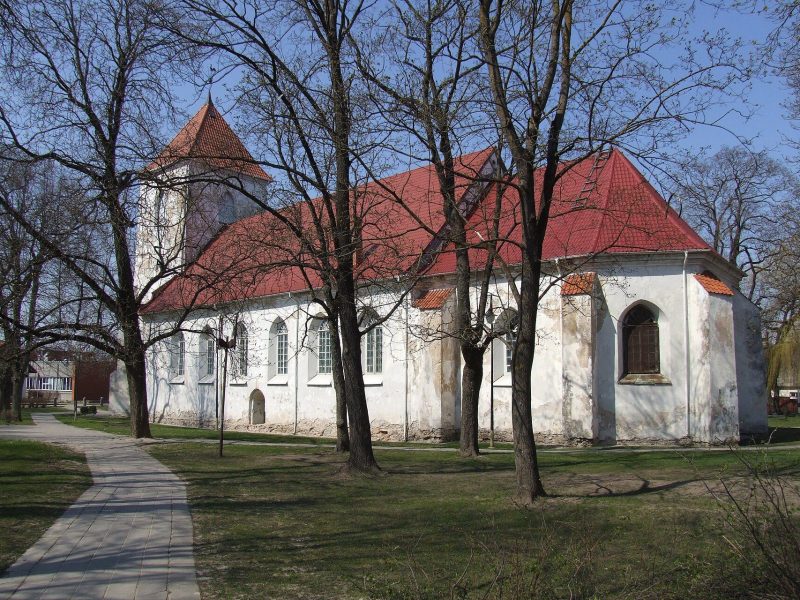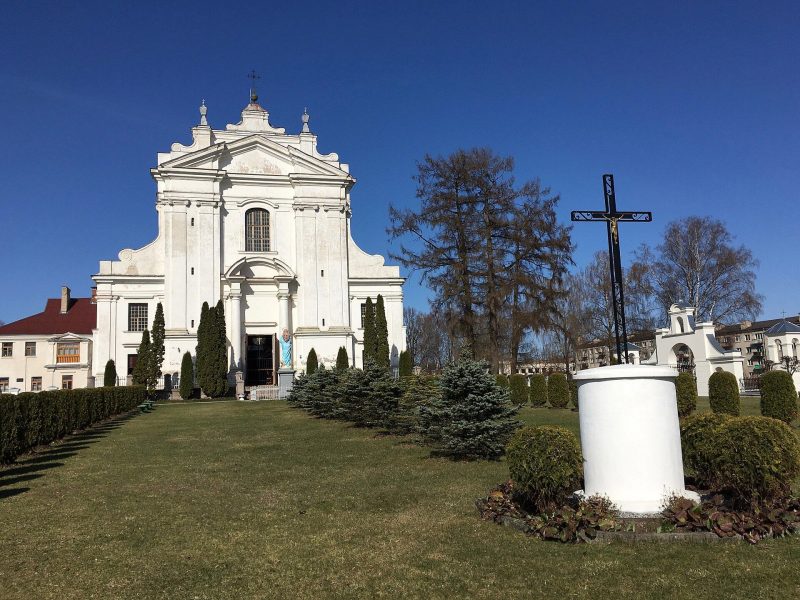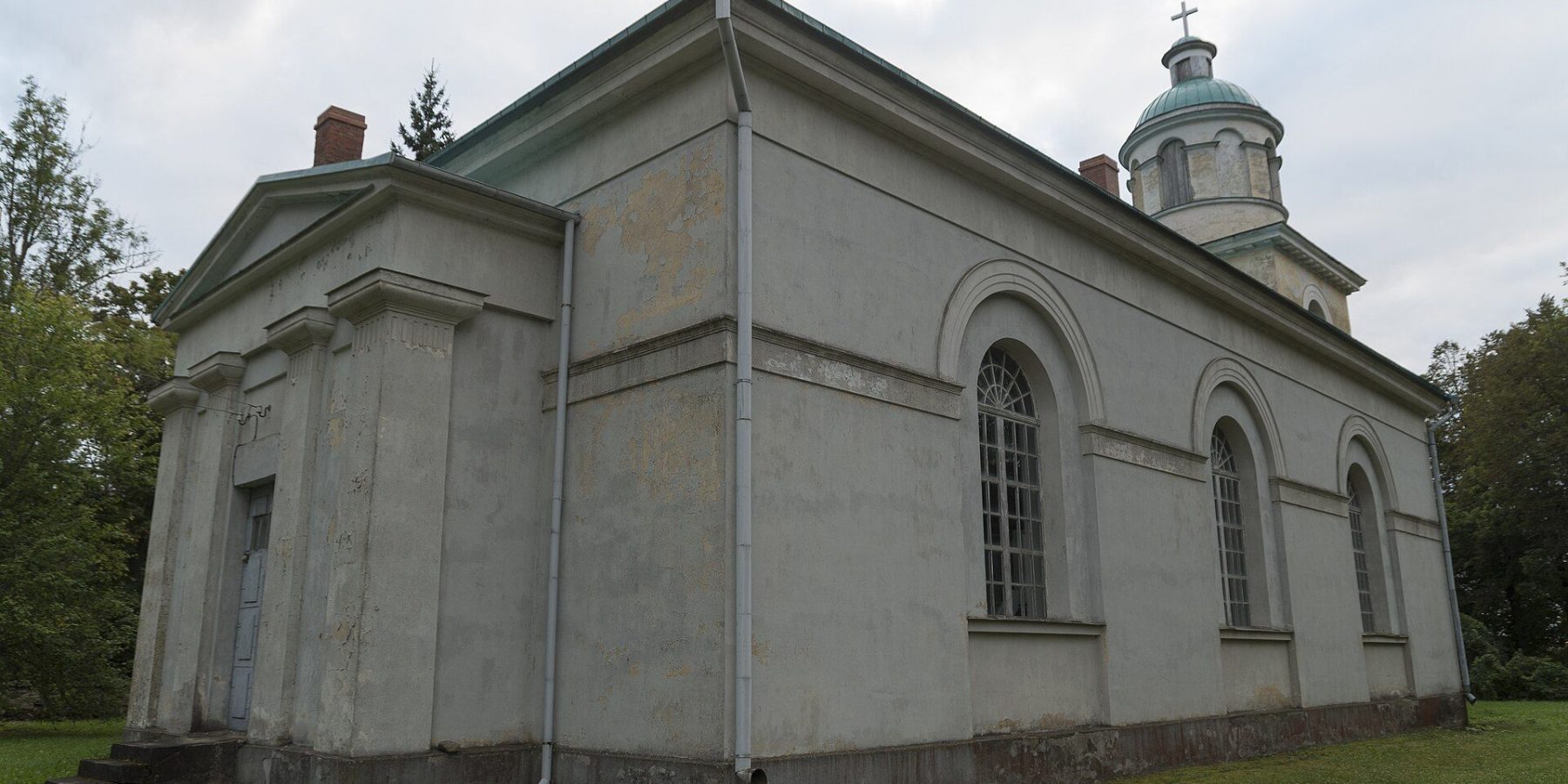
On Church Hill in Vārnava, 12 km from Viesīte, stands a white Empire-style church tied to one of the founders of written Latvian — Old Stender. Sunākste Church is where rural calm and the Age of Enlightenment meet in Sēlija, one of Latvia’s least-visited historical lands: across the road five generations of the Stender pastor family rest on a small hill, and an alphabet trail leads to the site of the old parsonage.
At a glance
| Name | Sunākste Stender Evangelical Lutheran Church (until 2025 the Sunākste Lutheran, or White, Church) |
| Address | Ģederti, Viesīte parish, Jēkabpils Municipality |
| Built | 1826–1829, Empire style |
| Known for | The grave of Gotthard Friedrich Stender (1714–1796) and the Stender family cemetery |
| Status | State-protected cultural monument (since 2013) |
| Phone | +371 29297930 |
The church on Church Hill
The parish is far older than the present building. A chantry is said to have been founded here in 1516, and a wooden church was built on the same hill in 1570. It was badly damaged in the Polish–Swedish War and destroyed completely in 1636. After the plague of 1712 the Sunākste and Sēlpils parishes were merged, and they were separated again only in 1871. In 1816 fire destroyed the next wooden church too, and services moved to the chapel of Vārnava manor.
The present masonry church was built between 21 July 1826 and 12 October 1829, in the Empire style with a three-storey tower and pronounced cornices. Inside, a neo-Gothic altar is full of Gothic details; the altarpiece “The Ascension of Christ” (1844, Johann Leberecht Egnick) was replaced with a photographic copy in 2004. Plaques remember those who fell in World War I and the Latvian War of Independence and those deported to Siberia. In September 2025, at the request of parishioners, the church was renamed the Stender Church in honour of the family.
Old Stender and his family
Gotthard Friedrich Stender (1714–1796), known as Old Stender, served in Sunākste from 1766 until his death, first as assistant pastor and then as pastor, preaching in the earlier wooden church. Most of his work was written here: “The Book of High Wisdom about the World and Nature” (1774), often called the first popular-science book in Latvian, the illustrated primer “Bildu ābice” (1787) and the Latvian–German dictionary “Lettisches Lexikon” (1789). His son Alexander Johann and three more generations of Stenders served the parish until 1918.
Across the road from the church is Stender Hill with the old cemetery, where five generations of the family are buried. Old Stender’s grave is covered by a Daugava dolomite slab reading “Sche aprakts G.F.Stenders LATWIS” (“Here lies G. F. Stender, a Latvian”). A memorial stone with a passage from the “Book of High Wisdom” was unveiled by the church in 1989. In spring 2014, for Stender’s 300th anniversary, a roughly 300 m alphabet trail was laid out to the site of the former parsonage — look for the tablet with your initial. The parsonage park also holds the sculptural ensemble “Gates of Light”.
Did you know?
Old Stender was also an inventor: in 1765–1766 he described a washing machine of his own design, and he made a large globe for the King of Denmark. On his gravestone he described himself in a single word — “Latwis”, a Latvian.
Visiting
- Getting there: the church is in Vārnava (Ģederti), ~12 km from Viesīte. From Jēkabpils drive to Viesīte and continue west; public transport is limited.
- Opening hours: no regular hours are published; to see the interior, call +371 29297930 in advance. The cemetery, alphabet trail and park are always accessible.
- Price: a donation to the parish is appreciated.
- Time needed: about an hour for the church, cemetery and trail.
- Combine with: Gārsene Manor, the Jaunsudrabiņš Museum “Riekstiņi” and Sēlpils castle mound on the Daugava.
FAQ
Where is Old Stender buried?
On Stender Hill in the old cemetery across the road from Sunākste Church, under a Daugava dolomite slab with an inscription.
Why is it called the Stender Church?
In September 2025, at parishioners’ request, it was renamed in honour of the Stender family, five generations of whom served here as pastors.
Is the church open to visitors?
There are no published opening hours — arrange a visit by calling +371 29297930.
Sources: lv.wikipedia.org “Stendera baznīca”, “Gothards Frīdrihs Stenders”; visitaizkraukle.lv (Sunākste Stender Church, Stender’s Trail and family cemetery, Stender Park and “Gates of Light”); LSM (2024).