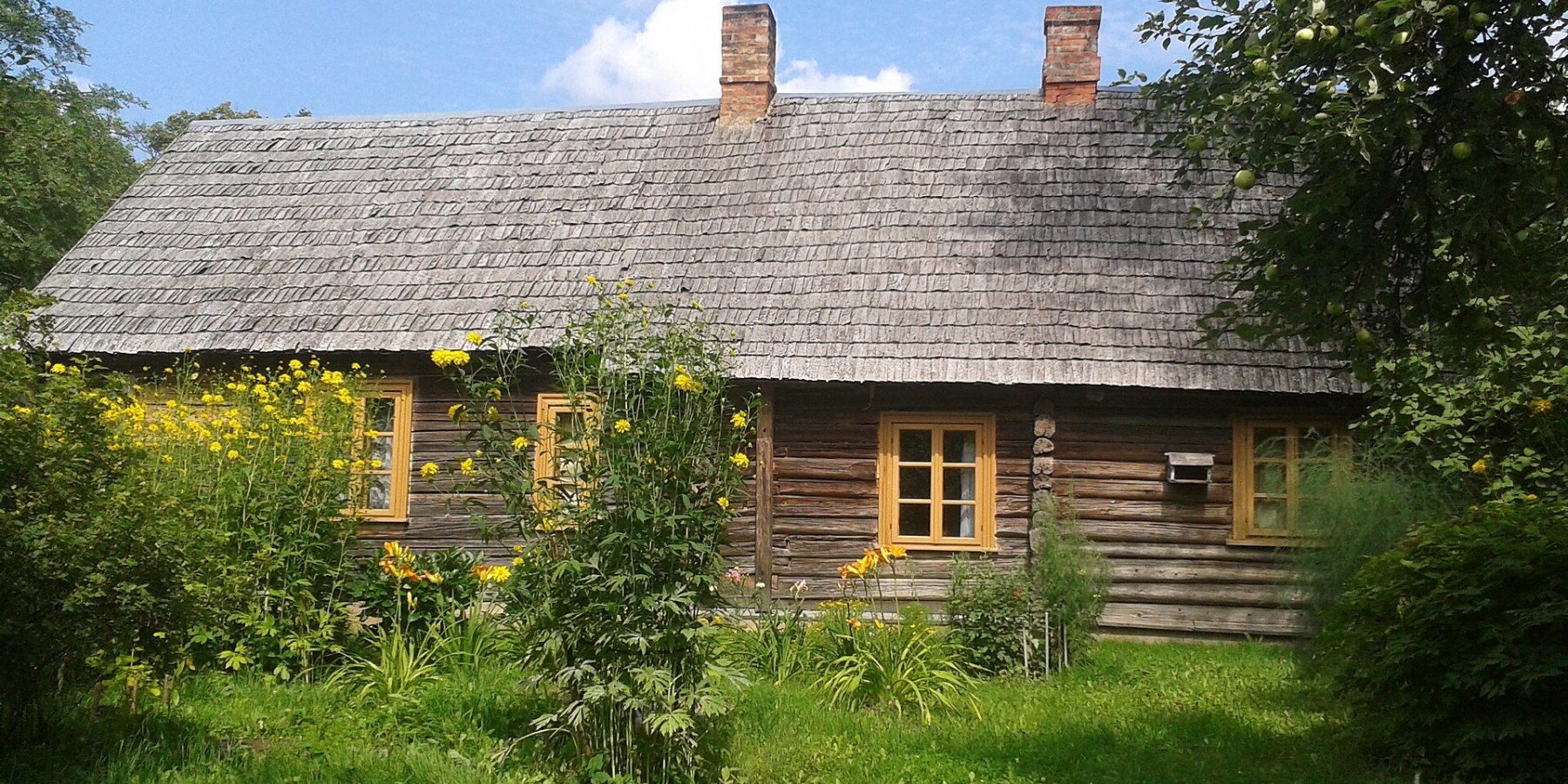
“Riekstiņi” is the very “home” of Jānis Jaunsudrabiņš’s “The White Book” — a Selonian farmstead near Nereta where the writer and painter spent six years of his childhood. It has been a memorial museum since 1967 and is one of the best-loved spots in Sēlija, a little-visited historical land that looms large in Latvian literature: in the yard, the orchard and the surrounding fields you can still recognise scenes from the book.
At a glance
| Address | “Riekstiņi”, Nereta parish, Aizkraukle Municipality, LV-5118 |
| Location | ~7 km east of Nereta, 2.5 km off road P73 (Riga–Nereta–Subate); ~119 km from Riga |
| Founded | 1967 |
| Highlights | Memorial exhibition, a Selonian farm around 1900, old tools, places from “The White Book” |
| Opening hours | Tue–Sat 9:00–18:00, Sun 9:00–16:30, Mon closed; 1 Nov–15 Apr by appointment |
| Tickets | Adults €2; pupils, students, seniors €1 |
The writer’s “home”
Jānis Jaunsudrabiņš was born on 25 August 1877 at “Krodziņi” in Nereta parish, into a farmhand’s family. After his father died in 1880 the family moved to “Riekstiņi” — the farm he called simply “home” (“Mūsmājas”) in “The White Book”. He wrote most of its sketches in 1910–1913, and the book became one of Latvia’s best-loved childhood classics. At the end of World War II Jaunsudrabiņš fled to Germany as a refugee and died in Körbecke on 28 August 1962. On 13 September 1997 his remains were reburied in Ķišķi cemetery at Nereta.
The Riekstiņi farmstead is about 200 years old and a cultural monument of national importance. The farm building dates from 1820; there is also a dwelling house, a granary and a threshing barn, and the orchard has apple trees a century old.
What to see
Five rooms in the farm building hold the memorial exhibition — Jaunsudrabiņš’s books, paintings or copies of them, photographs, documents and personal belongings. Another room covers other writers from the area, and the rest are furnished as a typical Selonian farm of the early 1900s. Outdoors is a collection of old tools and ethnographic objects, and every year the museum hosts themed, art, photography and applied-art exhibitions.
Paths lead from the farm to places from “The White Book” in the surrounding countryside, and there is a reading activity based on the book’s illustrations. Tours are offered in Latvian, Russian, Lithuanian and English; there is free parking, a campfire site and ramps for visitors with limited mobility.
Did you know?
Jaunsudrabiņš was a painter as well as a writer, and he illustrated “The White Book” himself. The museum’s reading activity for children is built around those very drawings.
Visiting
- Getting there: ~119 km from Riga; take the P73 to Nereta, then ~7 km east (the last 2.5 km off the tarmac). From Jēkabpils, drive to Nereta via Viesīte.
- Opening hours: according to muzeji.lv, Tue–Sat 9:00–18:00, Sun 9:00–16:30, closed Monday; from 1 November to 15 April visits must be booked. Phone +371 65176467 or +371 29133076.
- Tickets: adults €2; pupils, students and seniors €1; family tickets available. Prices may change.
- Time needed: 1–1.5 hours; half a day with a walk to the book’s places and Ķišķi cemetery.
- Combine with: Sunākste Stender Church and Gārsene Manor.
FAQ
Is Riekstiņi the real home from “The White Book”?
Yes. After his father died in 1880, Jaunsudrabiņš’s family moved to Riekstiņi, which he called “home” in “The White Book”.
Where is Jānis Jaunsudrabiņš buried?
In Ķišķi cemetery at Nereta, where he was reburied on 13 September 1997. He died in Germany in 1962.
Is the museum open in winter?
Yes, but from 1 November to 15 April you need to book your visit in advance.
Sources: muzeji.lv (Jānis Jaunsudrabiņš Museum “Riekstiņi”); visitaizkraukle.lv; celotajs.lv; lv.wikipedia.org “Jānis Jaunsudrabiņš”. Hours and prices change — contact the museum before you go.