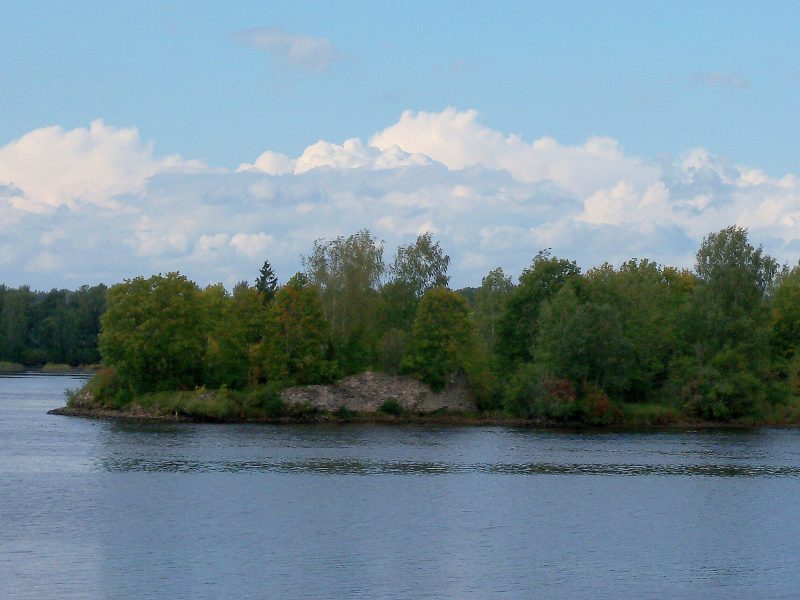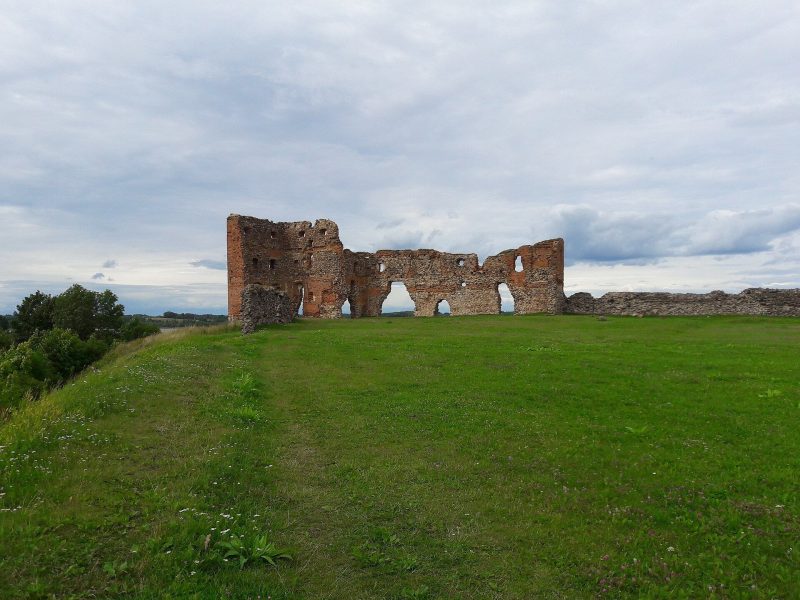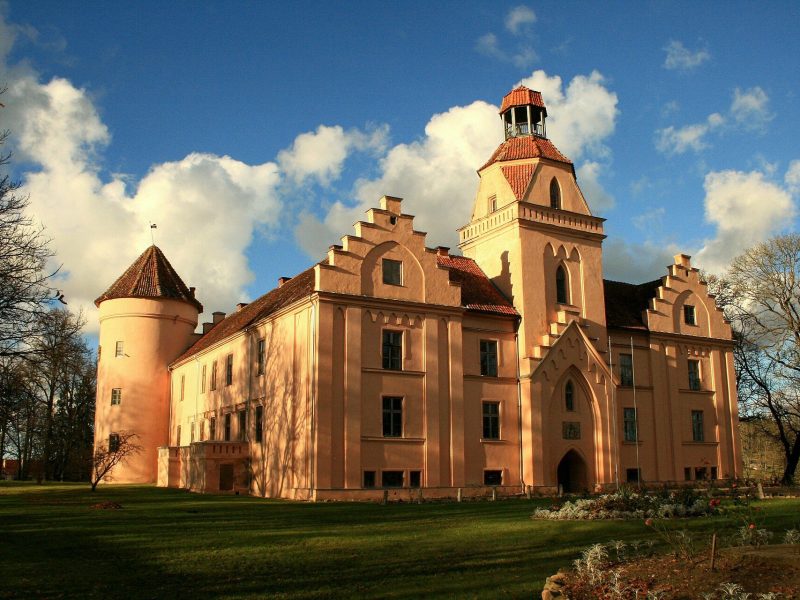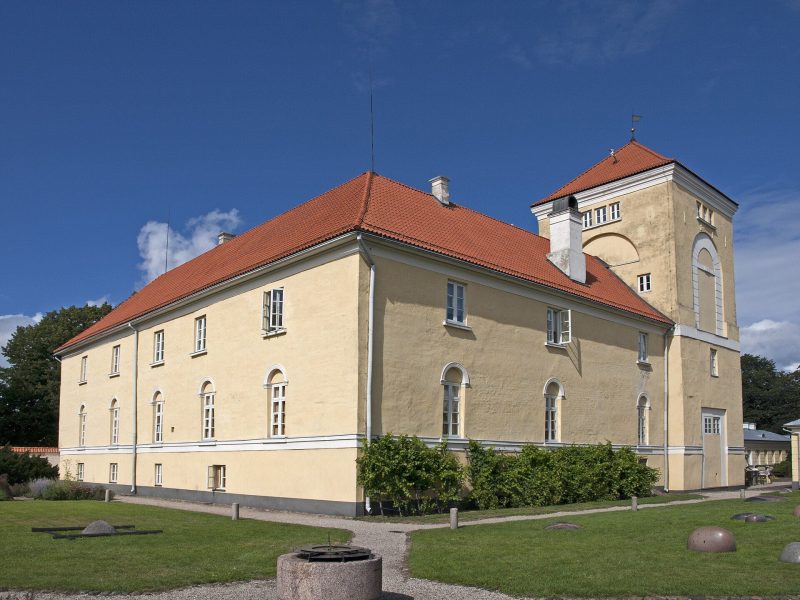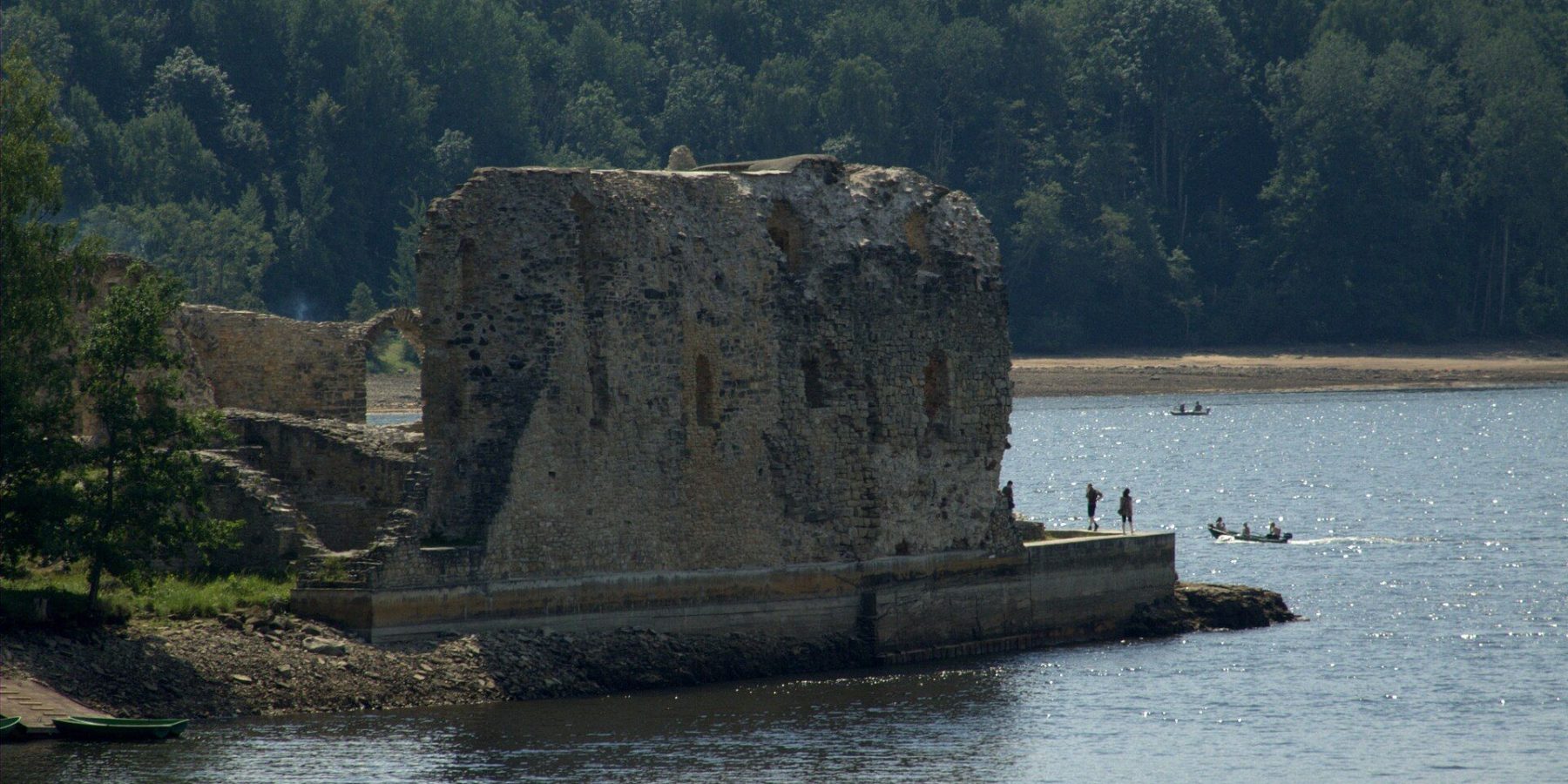
Where the Pērse flows into the Daugava, the walls of a medieval castle rise in Koknese Park — one of the most picturesque ruins in Latvia. The castle once stood on a high bank, but after the Pļaviņas hydropower plant was built the water rose to its foundations, and the ruins are now reflected in the Daugava. The site’s history goes back beyond the crusaders: this was the stronghold of Vyachko, the Latgalian ruler of Koknese.
At a glance
| Location | Koknese Park, Koknese, Aizkraukle municipality — at the confluence of the Pērse and Daugava |
| Built | Shortly after 1209, under Bishop Albert of Riga |
| German name | Kokenhusen |
| Before that | A Latgalian hillfort with a wooden castle; settled from around the start of the Common Era |
| Destroyed | 25 July 1701, during the Great Northern War |
| Status | Archaeological and architectural monument of national importance |
History
From Vyachko’s hillfort to a bishop’s castle
Archaeologists have found traces of settlement on the hill from the 1st century BC or the start of the Common Era, and by the 5th–9th centuries it was densely built up with log houses and iron-smelting furnaces. In the early 13th century Koknese was ruled by the Latgalian prince Vyachko. In 1208 he burned his own wooden castle and left, and shortly after 1209 Bishop Albert of Riga had a stone castle built in its place, called Kokenhusen in German.
In 1269 the castle was granted as a fief to the von Tiesenhausen family, who held it until 1397, when it passed under the direct control of the Archbishop of Riga. In the Middle Ages Koknese was one of the archbishopric’s key castles on the Daugava route.
Wars and the explosion of 1701
After the Livonian War, in 1582, the castle became the seat of Koknese county under Poland–Lithuania. A Swedish attack failed in 1601, but the Swedes took the castle in 1621. In October 1700, at the start of the Great Northern War, Saxon troops occupied it, and as they withdrew on 25 July 1701 Saxon Colonel Bose ordered the two western towers to be blown up. The castle has stood empty ever since.
In 1780 the ruins were bought by Otto von Löwenstern and became a romantic feature of the manor park. In 1862 the north-eastern end collapsed into the Pērse. When the Pļaviņas hydropower plant was built in the 1960s, its reservoir raised the Daugava, flooding the Pērse valley and its waterfall and bringing the river right up to the castle’s foundations.
What to see
- The ruins — two outer walls survive to about two storeys, along with part of the courtyard walls, looking out over the Daugava and the mouth of the Pērse.
- Visitor pavilion — opened in April 2026, with a history exhibition, souvenirs, coin minting and an audio guide.
- Koknese Park — laid out in the early 20th century, with the restored “Faun’s Head” fountain, J. Zihmanis’s stone sculpture “Pērse Girl” marking the lost waterfall, and an 11-metre wooden sculpture by G. Burvis.
- Boat trips — in the warm season the boats “Vīgante” and “Sēlis” sail on the Pērse and Daugava from the jetty by the ruins.
Did you know?
When the Pļaviņas reservoir began washing away the banks by the castle, the water exposed old burials with jewellery. Archaeologists also found remains of a 12th-century stone building and a fragment of a bronze bell — suggesting an Orthodox church may have stood here in Vyachko’s time.
Visiting
- Where: Koknese Park, Koknese; the Koknese tourist information centre is at 1905. gada iela 7.
- When: the visitor pavilion by the ruins is open daily 9:00–19:00 from April to October.
- Admission: a small entry fee is charged in season, but sources give different amounts — check the current price with the Koknese tourist office, tel. +371 65161296 or +371 29275412.
- Combine with: further down the Daugava, Krustpils Castle and things to do in Jēkabpils.
FAQ
Why are the Koknese ruins in the water?
The castle was built on a high bank, but after the Pļaviņas hydropower plant was built in the 1960s the Daugava rose and the water now reaches the castle’s foundations.
Who destroyed Koknese Castle?
Saxon troops, who blew up its western towers as they withdrew on 25 July 1701, during the Great Northern War.
How long do I need?
An hour is enough for the ruins and the park; with a boat trip and a walk along the Daugava, allow half a day.
Sources: visitaizkraukle.lv (Koknese Park; news on the visitor pavilion, 2026); visitkoknese.lv; latvia.travel; lv.wikipedia.org “Kokneses pils”; en.wikipedia.org “Koknese Castle”. Hours and prices can change — check before you go.