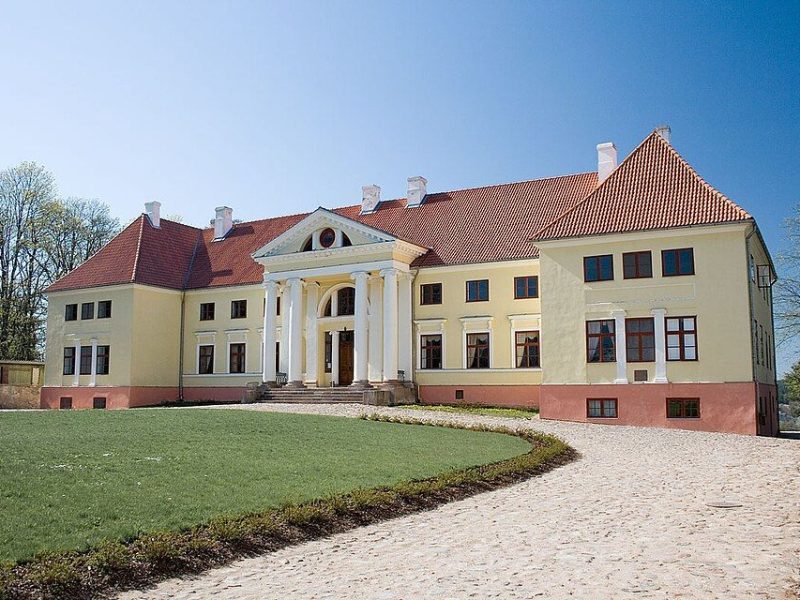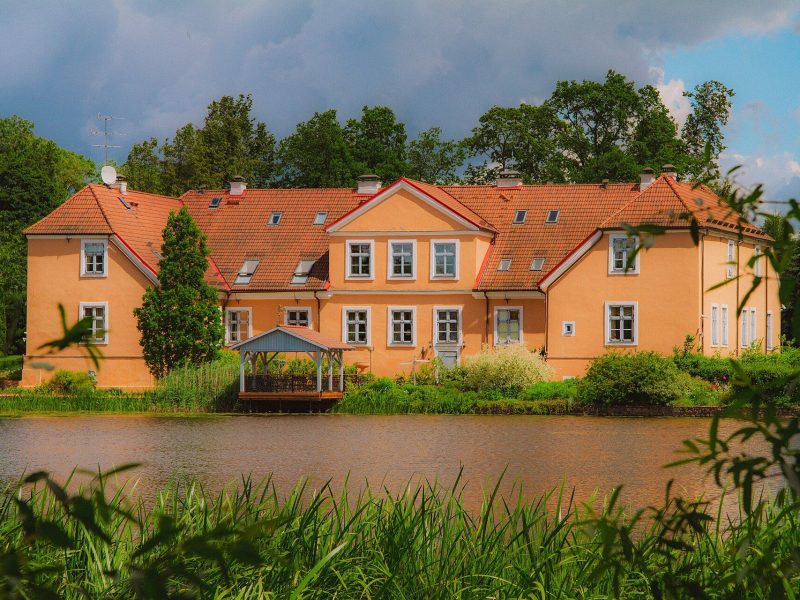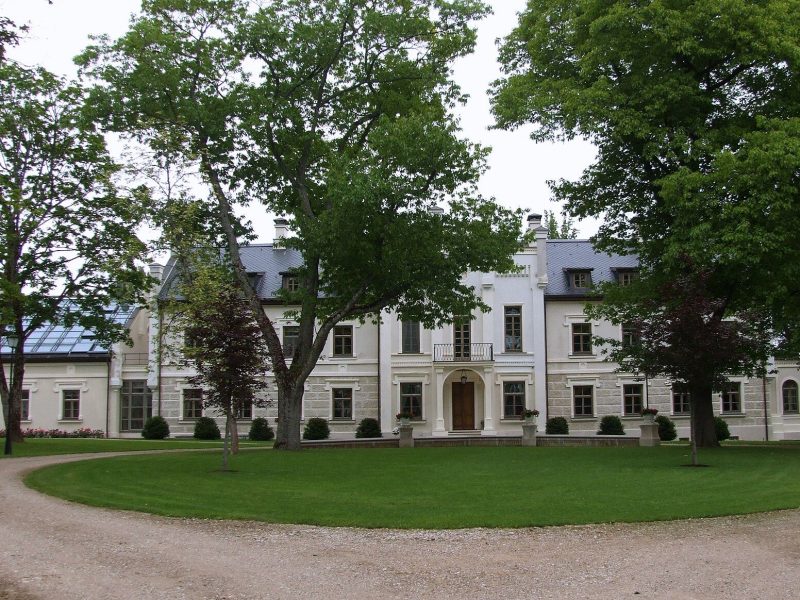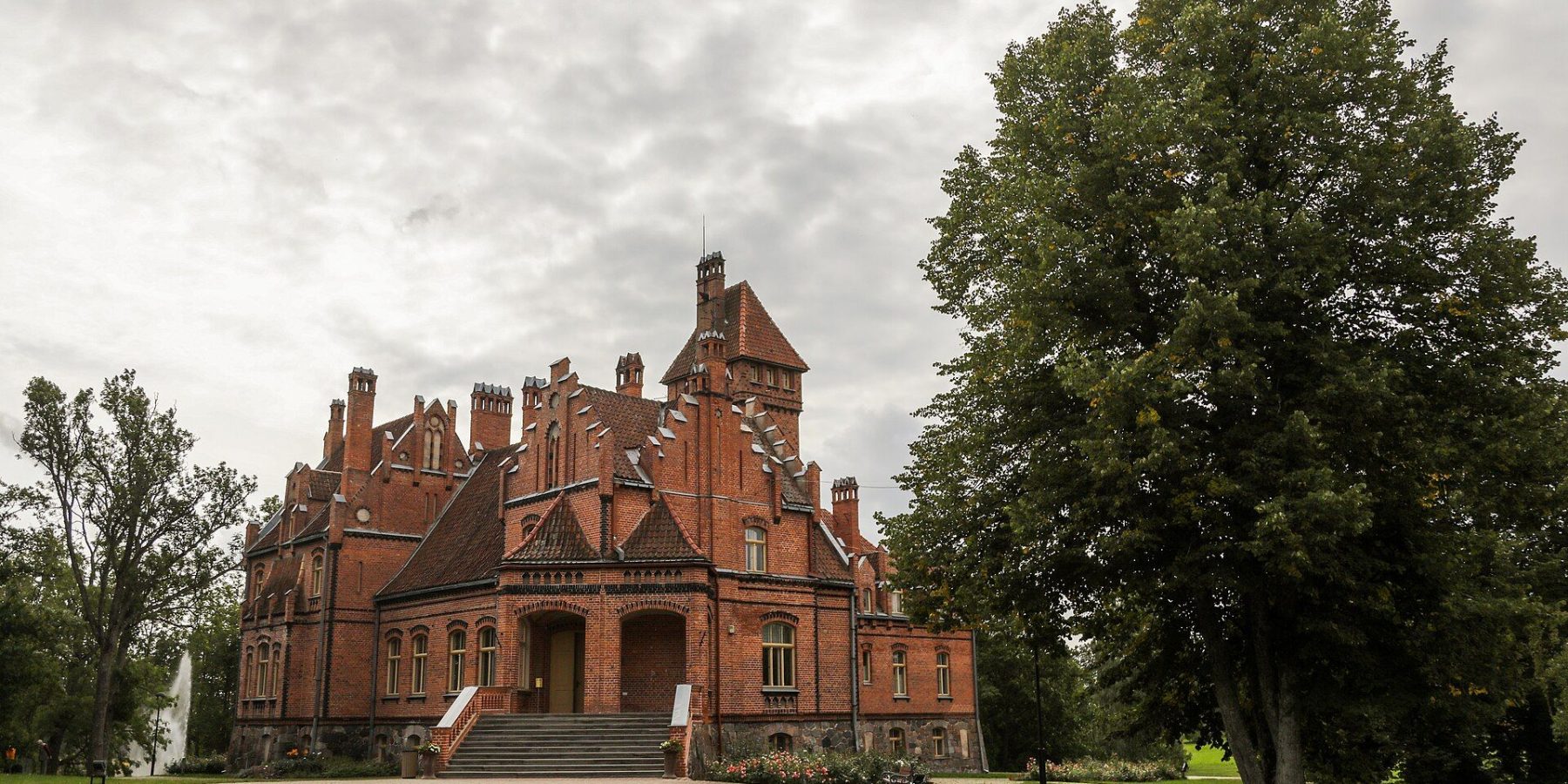
Jaunmoki Palace, set in the forest of Tukums Municipality, is a hunting lodge built in 1901 for George Armitstead, mayor of Riga. With its tower and Art Nouveau interiors it is one of the most elegant early 20th-century manor houses in Kurzeme — and it is home to Latvia’s only Forest Museum and a famous stove painted with views of Riga and Jūrmala.
At a glance
| Built | 1901, as a hunting lodge |
| Architect | Wilhelm Bockslaff |
| Commissioned by | George Armitstead, mayor of Riga |
| Address | Tume parish, Tukums Municipality |
| Today | Museum (including the Forest Museum), hotel, celebrations |
| Museum | Tue–Sun 10:00–18:00, adults €5.50 |
The Riga mayor’s hunting lodge
Jaunmoki manor is first mentioned in 1544. In 1885 it was bought by George Armitstead (1847–1912), an industrialist of English descent who later became mayor of Riga. He commissioned architect Wilhelm Bockslaff (1858–1912) to design a hunting lodge, completed in 1901. Bockslaff was one of Riga’s leading architects of his day; he also designed the rebuilding of Jaunpils Castle after the 1905 fire.
The Armitsteads owned the palace until 1904. It then passed to the Brinken (1904–1910), Ungern-Sternberg (1910–1918) and Freimanis (1918–1928) families. From 1928 to 1939 it housed the “Cīrulīši” children’s sanatorium.
From restoration to Forest Museum
During restoration work in 1974 it was decided to open a forest museum in the palace. The museum has been state-accredited since 2004 and holds 3,468 items. The palace is run by the state forest company Latvijas valsts meži (LVM); in January 2026 the merger of its subsidiary SIA “Jaunmoku pils” into LVM was approved. The palace complex is a state architectural monument, and the painted tile stove is protected separately as a state art monument.
What to see
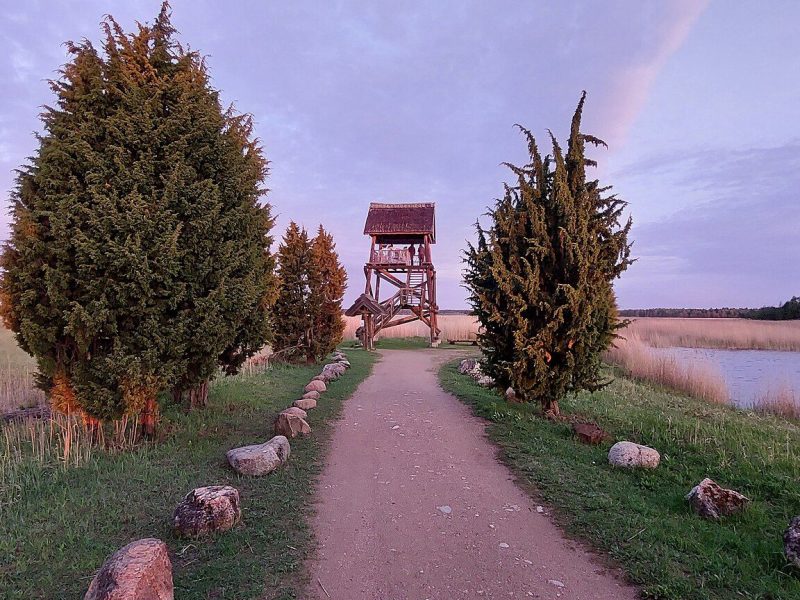
Visits begin at the painted tile stove. You then see the Art Nouveau interiors, George Armitstead’s memorial room and the roughly 20-metre tower, which you can climb. The second floor holds the Forest Museum, which covers the history of Latvia’s forests and wildlife with interactive displays for children and adults alike. There is also a permanent exhibition on the palace and forestry history, plus changing art and cultural history shows. Tours are offered in Latvian and English, and an audio guide is available.
You can also stay the night — rooms are booked through the palace website — and the palace is a popular venue for weddings and celebrations.
Did you know?
The painted tile stove was made in Riga in 1901 by the firm Zelm & Boehm for the exhibition marking Riga’s 700th anniversary. Its roughly 130 tiles show late 19th-century views of Riga and Jūrmala — Riga Castle, the Victory Column, the House of the Blackheads and the old railway bridge. After the exhibition it was given to Armitstead and installed at Jaunmoki.
Visiting
- Getting there: the palace is about 75 km from Riga in Tume parish, near Tukums; a car is the easiest option.
- Opening hours: Tuesday–Sunday 10:00–18:00, closed Mondays. Note: from 27 October to 28 November 2026 the palace and Forest Museum exhibitions are closed while a new exhibition is installed.
- Tickets: adults €5.50; pupils, students and pensioners €3.50; family ticket €14; audio guide €3. Prices may change — check jaunmokupils.lv.
- Time needed: 1.5–2 hours including the tower and the Forest Museum.
- Combine with: the Ķemeri bog boardwalk.
FAQ
Who built Jaunmoki Palace?
George Armitstead, mayor of Riga; architect Wilhelm Bockslaff designed it, and it was completed in 1901.
Can you stay overnight at Jaunmoki?
Yes, the palace has hotel rooms that can be booked through its website.
What is the Forest Museum?
An interactive exhibition on the second floor about the history of Latvia’s forests and wildlife; the museum describes itself as the only one of its kind in Latvia.
Sources: jaunmokupils.lv (about the palace, museum, home page); lv.wikipedia.org “Jaunmoku pils”; mammadaba.lv (article on the tile stove). Hours and prices change — check the official site.