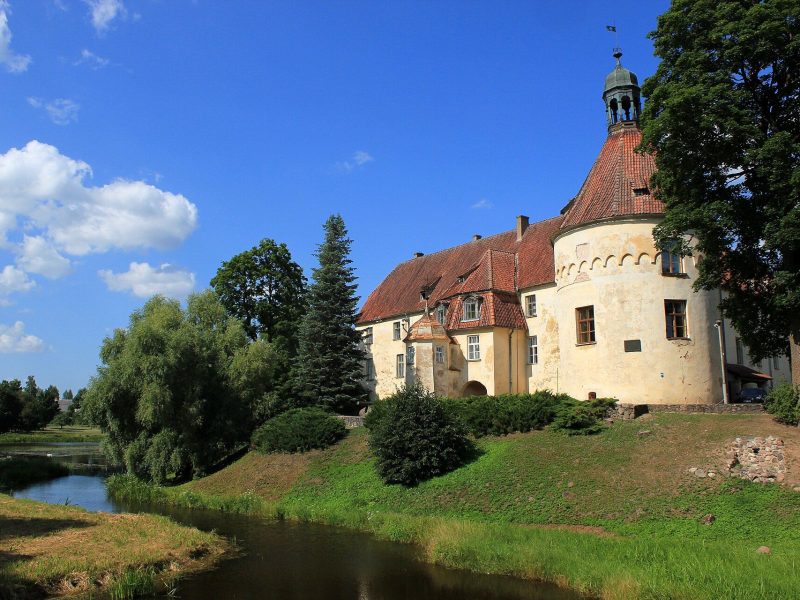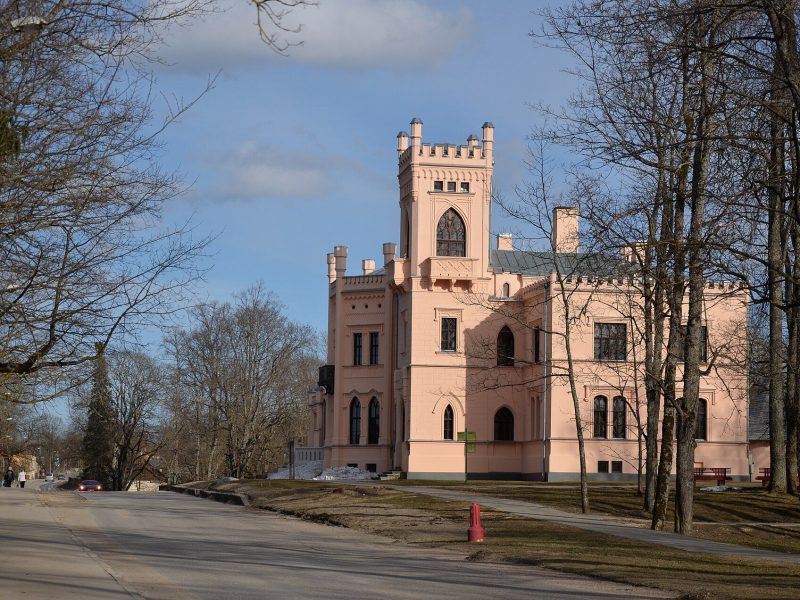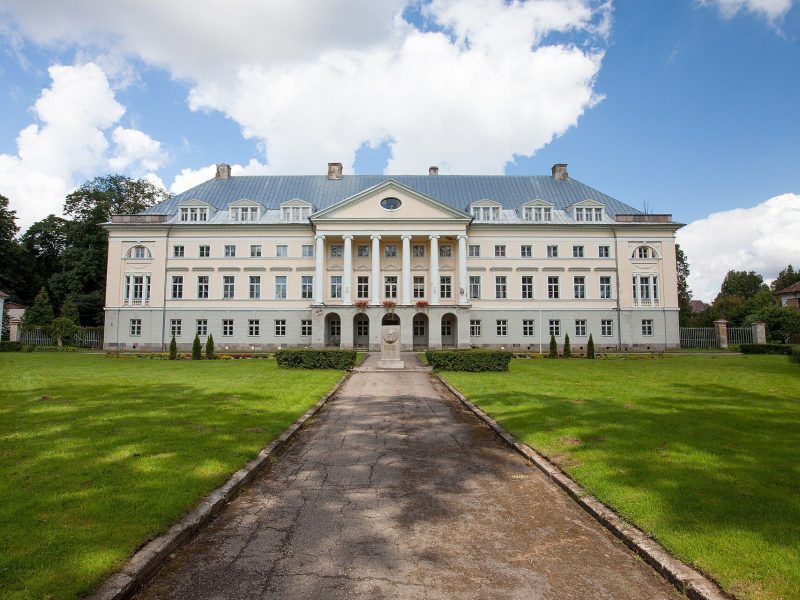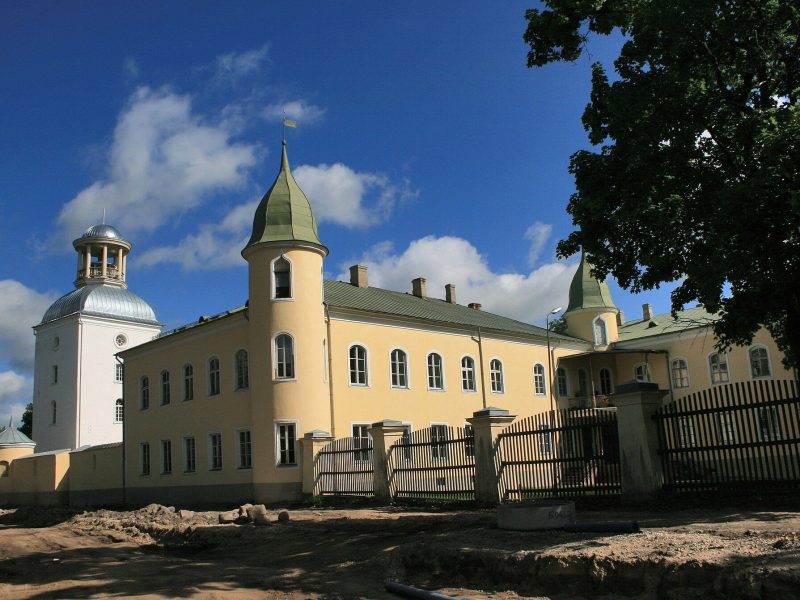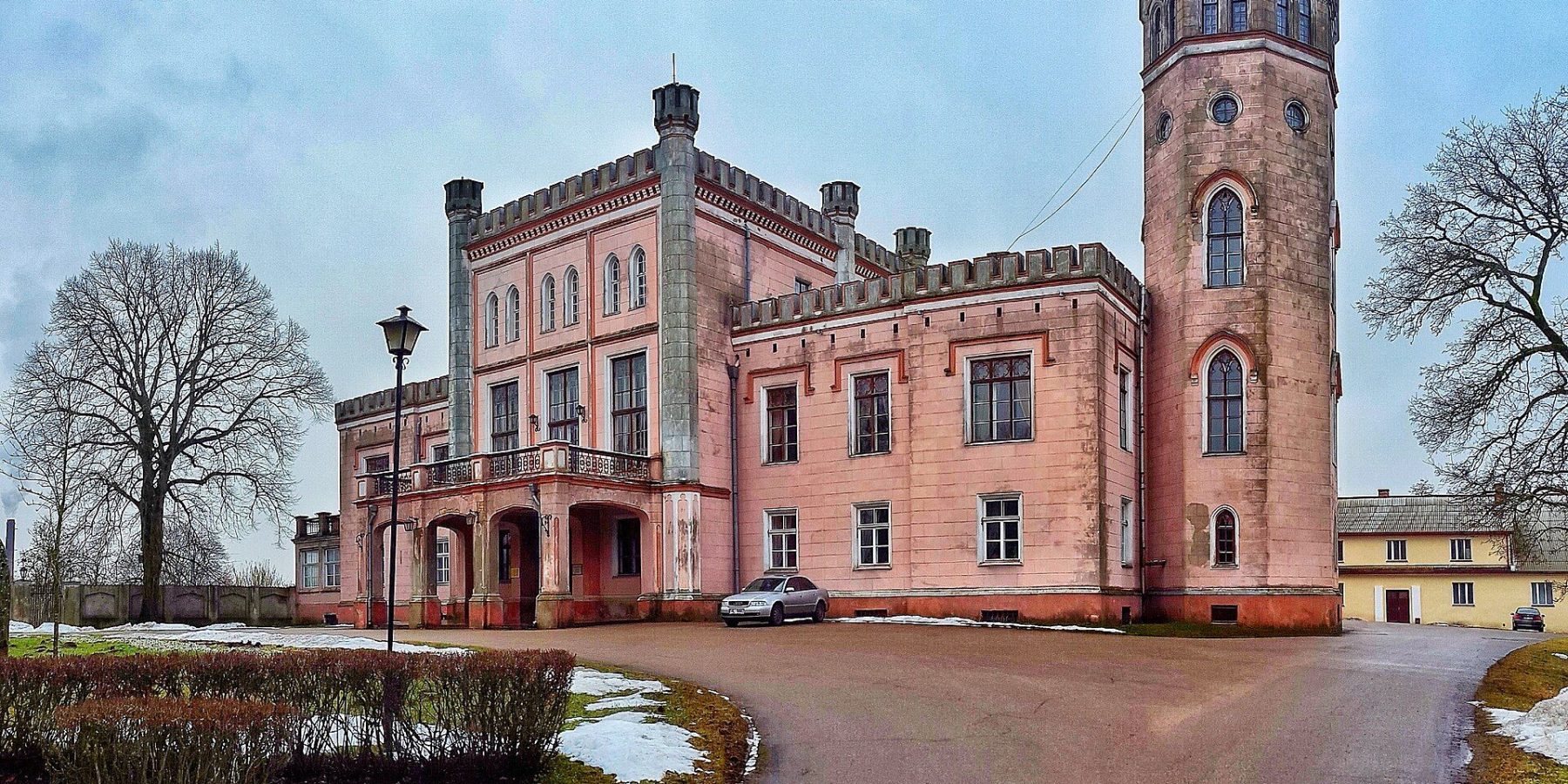
Near the town of Auce, in a 19th-century landscape park, stands a pale pink neo-Gothic palace with turrets and crenellated walls — Vecauce Palace, one of the oldest English Gothic Revival buildings in Latvia. It was designed for the Counts von Medem by the celebrated Berlin architect Friedrich August Stüler. Since 1920 the estate has served agricultural education, and the palace still belongs to a university teaching and research farm.
At a glance
| Location | Akadēmijas iela 11, Auce, Dobele municipality |
| Built | 1840s (lv.wikipedia: 1841–1845) |
| Architect | Friedrich August Stüler (Berlin) |
| Style | English Gothic Revival |
| Owners | Counts von Medem 1768–1920; now the university teaching and research farm “Vecauce” |
| Status | Architectural monument of national importance |
History
From a diet venue to the Medems’ palace
Vecauce is first recorded in 1616, when the Diet of the Duchy of Courland and Semigallia met here. The estate belonged to the Vietinghoff family until 1672, then to the Dukes of Courland, and from 1768 until the land reform of 1920 to the Counts von Medem.
The Medems built the present palace in the 1840s; sources give slightly different dates, most often 1841–1845. It was designed by the Berlin architect Friedrich August Stüler (1800–1865). A gazebo was added later in the 19th century and a veranda tower in the early 20th.
Fire, war and the academy
The palace burned in the unrest of 1905 and was rebuilt in simplified form in 1907 to a design by architect Hermanis Zeiberlihs. After 1920 the estate passed to the University of Latvia, and in 1921 the Vecauce experimental farm was founded. The palace was badly damaged in the Second World War.
After the war it was rebuilt as the teaching farm of the Latvian Agricultural Academy, and from the 1956/57 academic year all students of the agronomy and animal science faculty did their practical training here. Major renovation took place in 1988–1993. Today the palace belongs to the teaching and research farm “Vecauce” of the Latvia University of Life Sciences and Technologies.
What to see
- The façades — English Gothic Revival turrets, crenellations and entrances, best seen from the park.
- History exhibition — on the third floor: the story of Vecauce, its owners, the roots of the town of Auce and the founding of the experimental farm in 1921.
- Landscape park — about 13 ha with several ponds, paths and memorials, including graves of German and Russian soldiers who fell in the First World War.
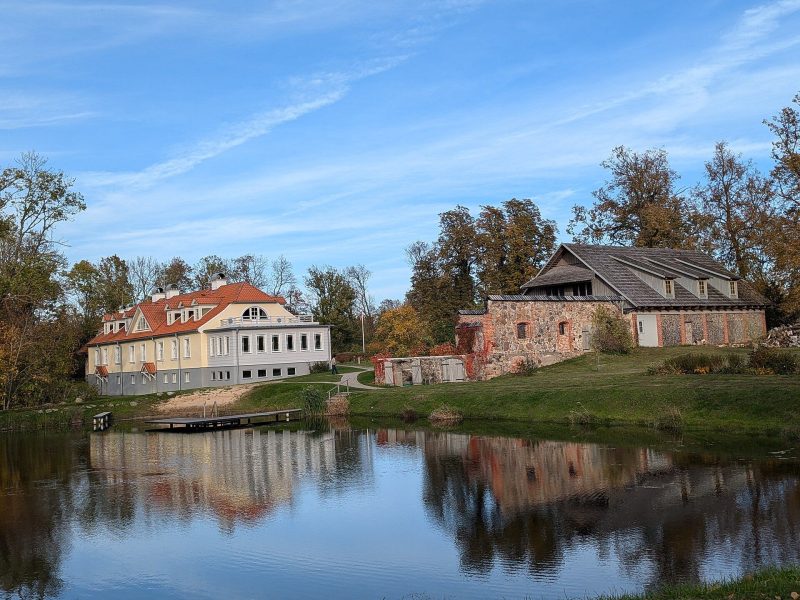
- Estate buildings — the gardener’s house, granary and other outbuildings near the palace.
Did you know?
You can stay the night: the palace sleeps 18 guests, and meals are cooked in the palace kitchen using produce from the estate’s own farm.
Visiting
- Where: Akadēmijas iela 11, Auce, Dobele municipality.
- When: 1 September–31 May, Monday–Thursday 11:00–16:00; 1 June–31 August, Tuesday–Sunday 10:00–17:00. Closed on public holidays; visits outside these hours can be arranged on +371 29195959.
- Tickets: adults €3; pupils, students, pensioners and visitors with disabilities €2; individual visit with a guide €5; group tour in Latvian €20 (book the guide in advance). Pre-school children free.
- Combine with: Tērvete Nature Park, Jaunpils Castle or Jelgava.
FAQ
Who designed Vecauce Palace?
The Berlin architect Friedrich August Stüler (1800–1865). After the 1905 fire it was rebuilt in simpler form by architect Hermanis Zeiberlihs.
Can you stay overnight?
Yes, the palace has accommodation for 18 people in double rooms; contact the palace administrator for prices.
Who owns Vecauce Palace?
The teaching and research farm “Vecauce” of the Latvia University of Life Sciences and Technologies.
Sources: vecauce.lv (palace history and public access — hours and prices); dobele.lv; lv.wikipedia.org “Vecauces pils”; en.wikipedia.org “Vecauce Castle”. Hours and prices can change — check before you go.