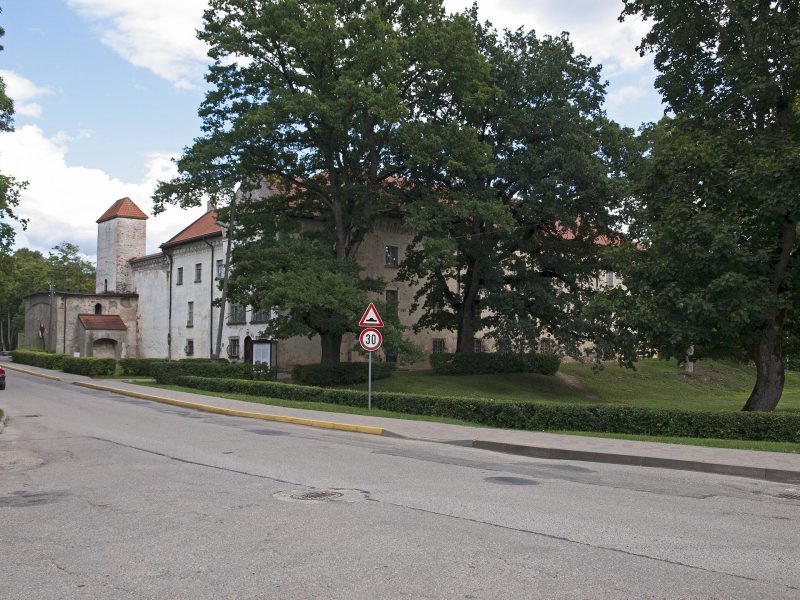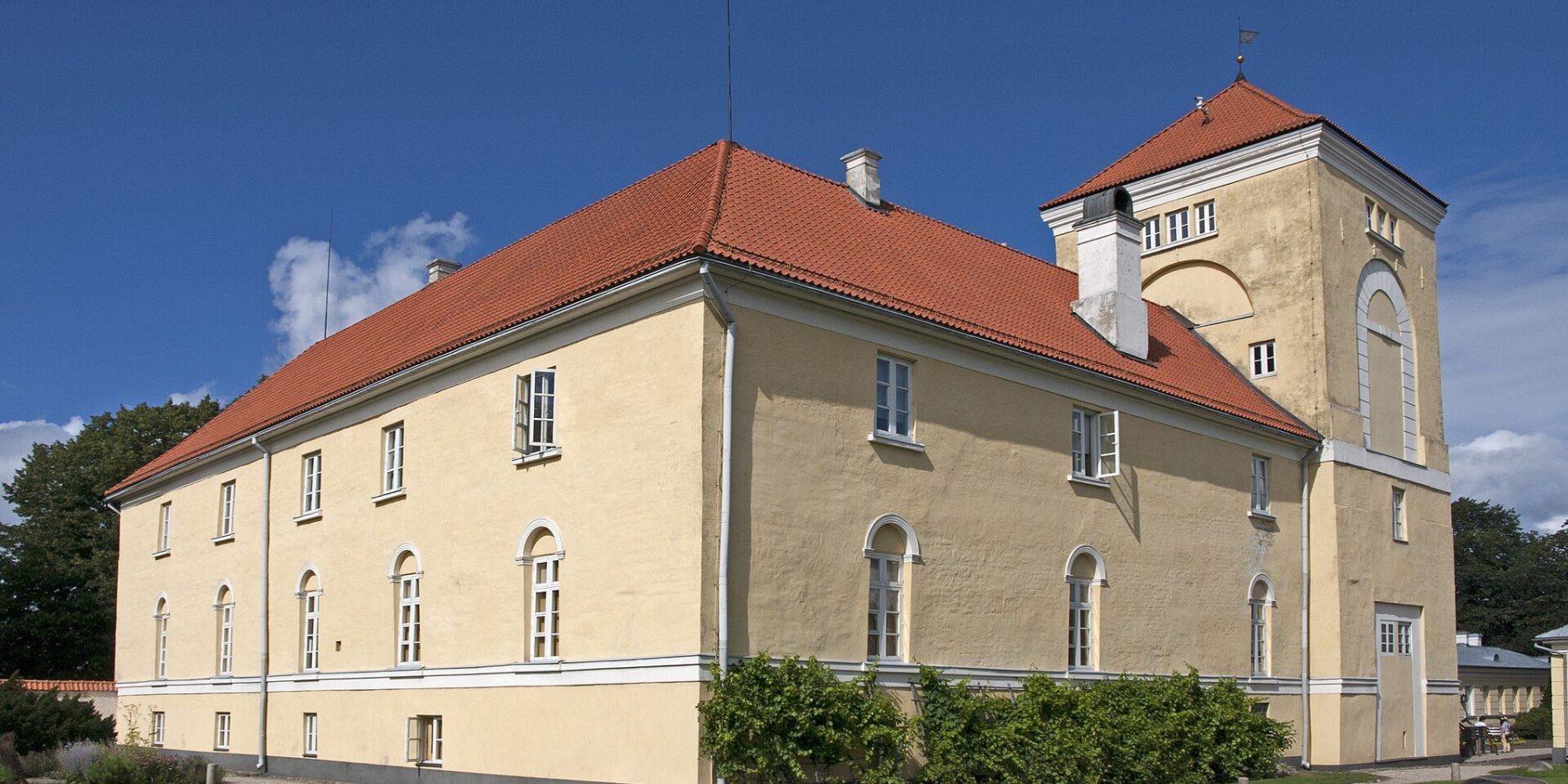
On the left bank of the Venta, close to where the river meets the sea, stands a square castle with a massive tower — the Livonian Order Castle, which the Ventspils Museum calls the oldest fortification in Latvia to survive so completely. Over seven centuries it has been a commander’s seat, a church, a prison and a Soviet border-guard base; today it houses the Ventspils Museum’s exhibitions.
At a glance
| Location | Jāņa iela 17, Ventspils — on the left bank of the Venta |
| Built | Late 13th century; the name “Winda” first recorded in 1290 |
| Builder | The Livonian Order; seat of the Ventspils commander (c. 1290–1562) |
| Layout | Four wings around a courtyard, 32.5 × 33.5 m |
| Distinction | The only surviving Livonian Order castle in Courland; its chapel is the oldest surviving church in Courland |
| Museum | Ventspils Museum permanent exhibition since 2001 |
History
Seat of the Order’s commander
Written sources mention the site at the mouth of the Venta in the mid-13th century, and the castle’s name, “Winda”, first appears in 1290. Archaeology shows that the first tower went up in the late 13th century, and by the early 14th century the castle was a square, four-winged fortress around a courtyard. In the 15th century the tower was raised, also serving as a landmark for sailors.
From around 1290 to 1562 the castle was the residence of the Ventspils commander. After the end of the Livonian Order it passed to the Duchy of Courland and Semigallia, and under the duchy’s 1617 constitution the Ventspils captain held court here. In 1659 Swedish troops wrecked the castle; it was later rebuilt.
Church, prison and border guards
From 1706 to 1835 the castle chapel served as a Lutheran church, and from 1845 to 1901 as an Orthodox garrison church of the Russian imperial army. In 1832 a prison was set up on the third floor; it operated until 1959. After the Second World War the castle housed various offices and a Soviet border-guard unit, which left in 1983.
In 1997 the façades were restored and the grounds landscaped; in September 2001 the Ventspils Museum opened its permanent exhibition here, and a second restoration stage in 2011 added exhibition space on the second floor.
What to see
- Permanent exhibitions — the history of the region, town, port and castle from prehistory to today, combining original objects, reconstructions and digital displays.
- Castle tower — a new exhibition opened on floors 3–5 of the tower in September 2026.
- Courtyard and chapel — the medieval plan of four wings around a courtyard is still easy to read.
- Pilskrogs — a tavern in the castle complex; a souvenir kiosk opens in summer.
Did you know?
The Ventspils Museum collection, part of which is kept at the castle, numbers more than 126,000 items.
Visiting
- Where: Jāņa iela 17, Ventspils, on the old-town side of the Venta.
- When: Tuesday–Sunday 10:00–18:00, closed Mondays.
- Tickets: adults €8; pupils, students and pensioners €4; family ticket (2 adults + 1–3 school-age children) €16; pre-school children free. A three-day pass covers all Ventspils museums.
- Groups: ticket desk and group bookings — tel. +371 63622031, +371 63626288.
- Combine with: on a Courland road trip, add Kuldīga or Cape Kolka.
FAQ
How old is Ventspils Castle?
The first tower was built in the late 13th century and the castle’s name first appears in 1290. By the early 14th century it was a complete four-winged castle.
Is the castle open on Mondays?
No, the museum in the castle is open Tuesday to Sunday, 10:00–18:00.
Why is it so well preserved?
It was in constant use — as a residence, church, prison and office building — so it was repaired after every war rather than left to fall into ruin.
Sources: muzejs.ventspils.lv (hours, ticket prices, exhibitions); lv.wikipedia.org “Ventspils pils”; en.wikipedia.org “Ventspils Castle”. Hours and prices can change — check before you go.