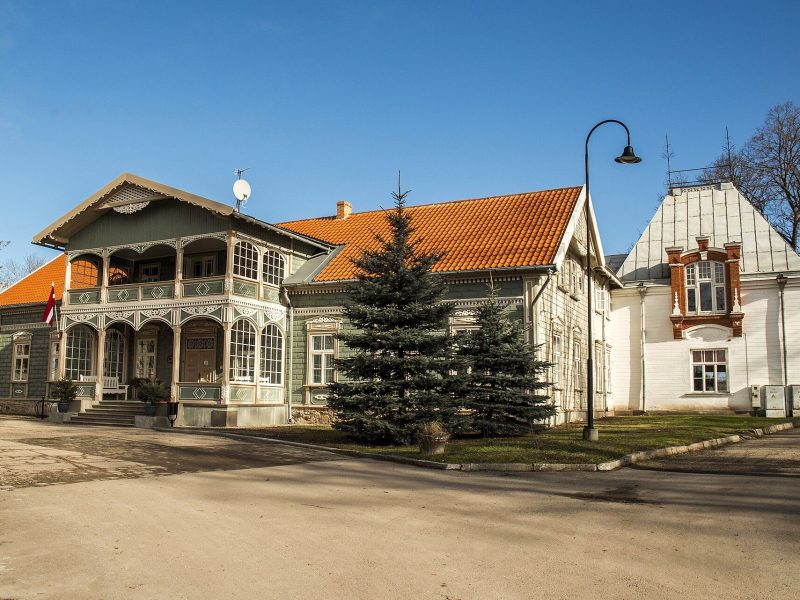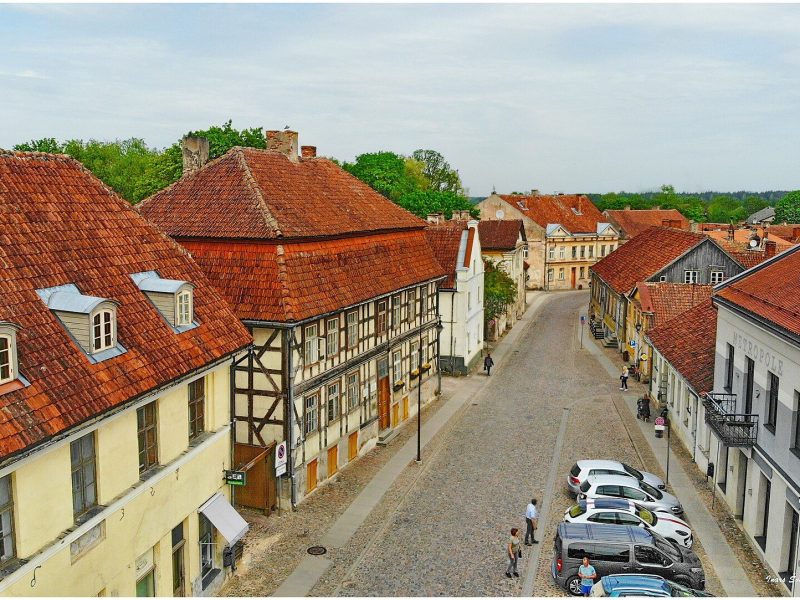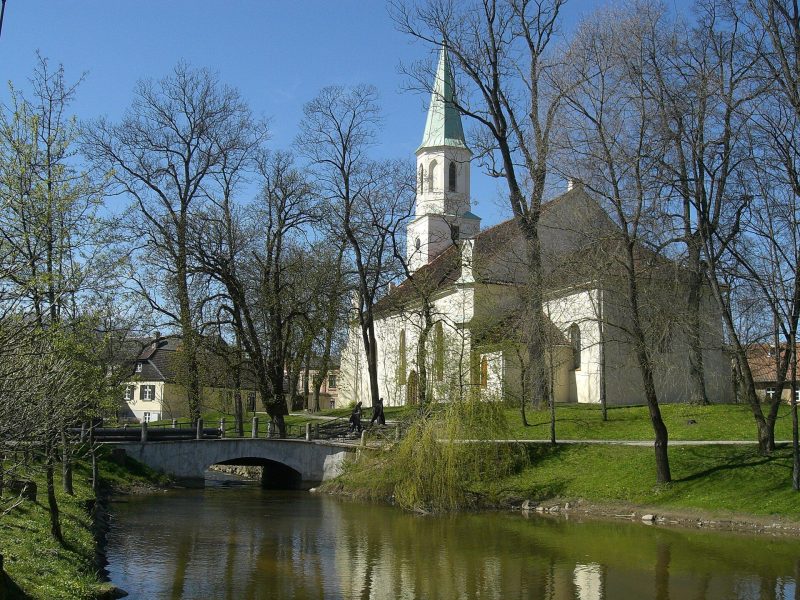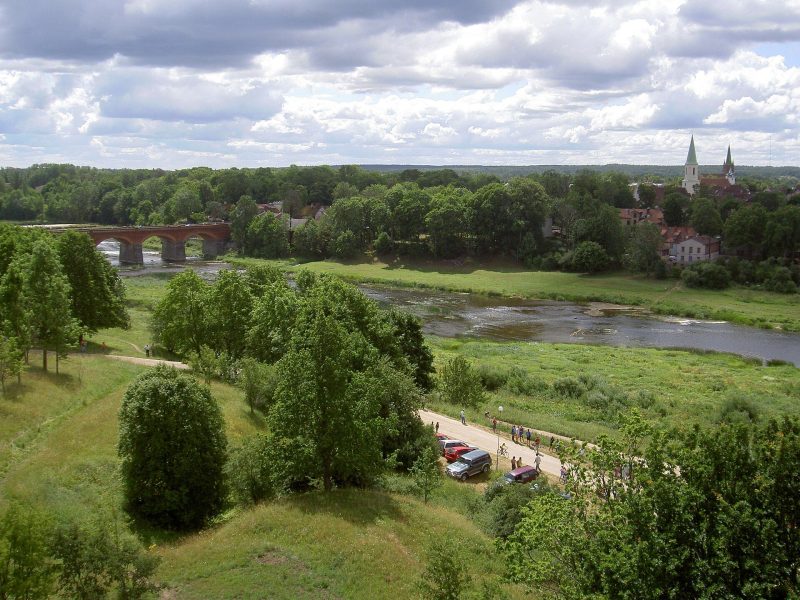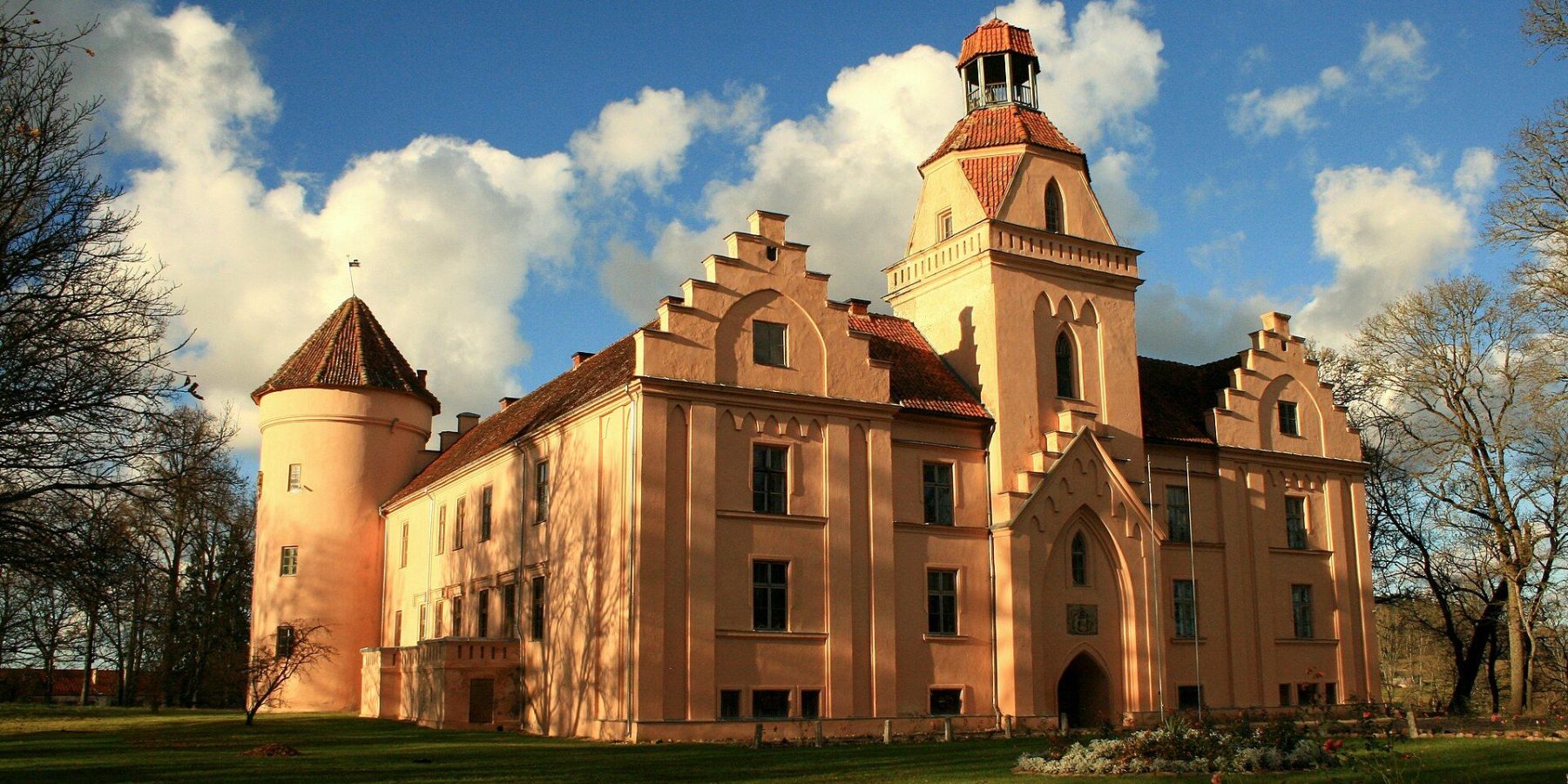
In the village of Ēdole in Kuldīga municipality, a castle on a lakeshore looks as if it stepped out of an English Romantic painting: red roofs, crenellated walls and towers wrapped in a landscape park. Behind the Gothic Revival façade are the walls of a medieval castle of the Bishop of Courland, and for almost four centuries one family — the Barons von Behr — lived here. Today the castle holds a museum, a tavern and guest rooms.
At a glance
| Location | Pils iela 1, Ēdole, Kuldīga municipality — on the shore of Lake Ēdole |
| Built | Traditionally dated 1264–1267; researchers place construction most likely in the early 14th century |
| First owner | The Bishop of Courland |
| Von Behr family | From 1561 to the early 20th century |
| Style | Gothic Revival — rebuilt 1835–1840; one of the first neo-Gothic buildings in Courland |
| Status | Architectural monument of national importance |
History
A bishop’s stronghold
The Ēdole lands were granted to the Bishop of Courland in 1253. Guidebooks often say the castle was built in 1264–1267, but there is no documentary proof, and historians believe the stone castle was most likely built in the first third of the 14th century. It was a compact fortified episcopal castle around a courtyard.
When the Livonian Confederation collapsed in 1561, the estate passed to Ulrich von Behr, former provost of the Courland cathedral chapter. In the second half of the 16th century the castle was strengthened and a round tower added; by the second half of the 17th century it had lost its military role and become a manor house, with new wings built outside the medieval walls.
The neo-Gothic makeover and 1905
The castle’s present look comes from the rebuilding ordered by Baron Adolf Werner von Behr in 1835–1840: some wings were pulled down, the façades were remodelled in Gothic Revival style and a landscape park was laid out around the house. That made Ēdole one of the first neo-Gothic buildings in Courland.
During the unrest of 1905 the castle was set on fire, and most of its 19th-century interiors were lost. Restoration started in 1906 and continued into the First World War, when the gate tower gained its octagonal top. After the Second World War the building served as a home for people with disabilities until the 1980s. In 1981–1986 architect G. Erdmanis surveyed the castle and drew up a restoration project.
In 1991 the castle became the property of Ēdole parish, and in 2008 it was sold at auction to private owners. Since then it has been gradually restored and opened to visitors.
What to see
- Castle museum — a permanent display in the White, Red and Green Halls, the library, the round tower room and a toy room, plus rooms of sculpture, antique clocks and handicrafts.
- Tower — you can climb the restored castle tower.
- “Fairy Tale Kingdom” — some 20 doll scenes based on Latvian folk tales.
- Pilskrogs — a tavern open since 2016 in the Fireplace Hall, the oldest surviving part of the castle, cooking with produce from local farms.
- Park and lake — a 19th-century landscape park on Lake Ēdole, with the best views of the Gothic Revival façade.
Did you know?
In 1985 the castle courtyard was used for a scene in the Latvian film “Emīla nedarbi”, based on Astrid Lindgren’s Emil stories.
Visiting
- Where: Pils iela 1, Ēdole, Kuldīga municipality; the village lies north of Kuldīga.
- Hours and tickets: we could not find current hours or prices on the official website — call the castle on +371 63321251 or check edolespils.lv before you go.
- Stay and events: the castle has guest rooms and hosts weddings, concerts and seminars.
- Combine with: Kuldīga’s old town, the Venta Rapid and the Kuldīga observation tower.
FAQ
Does Ēdole Castle really date from the 13th century?
The traditional date is 1264–1267, but no documents confirm it. Researchers think the stone castle was most likely built in the early 14th century.
Can you stay overnight?
Yes, the castle has guest rooms. Contact the castle for prices and availability.
Can you climb the tower?
Yes, the restored tower is part of the visit.
Sources: edolespils.lv; lv.wikipedia.org “Ēdoles pils”; en.wikipedia.org “Ēdole Castle”; latvia.travel; celotajs.lv. Hours and prices can change — check before you go.