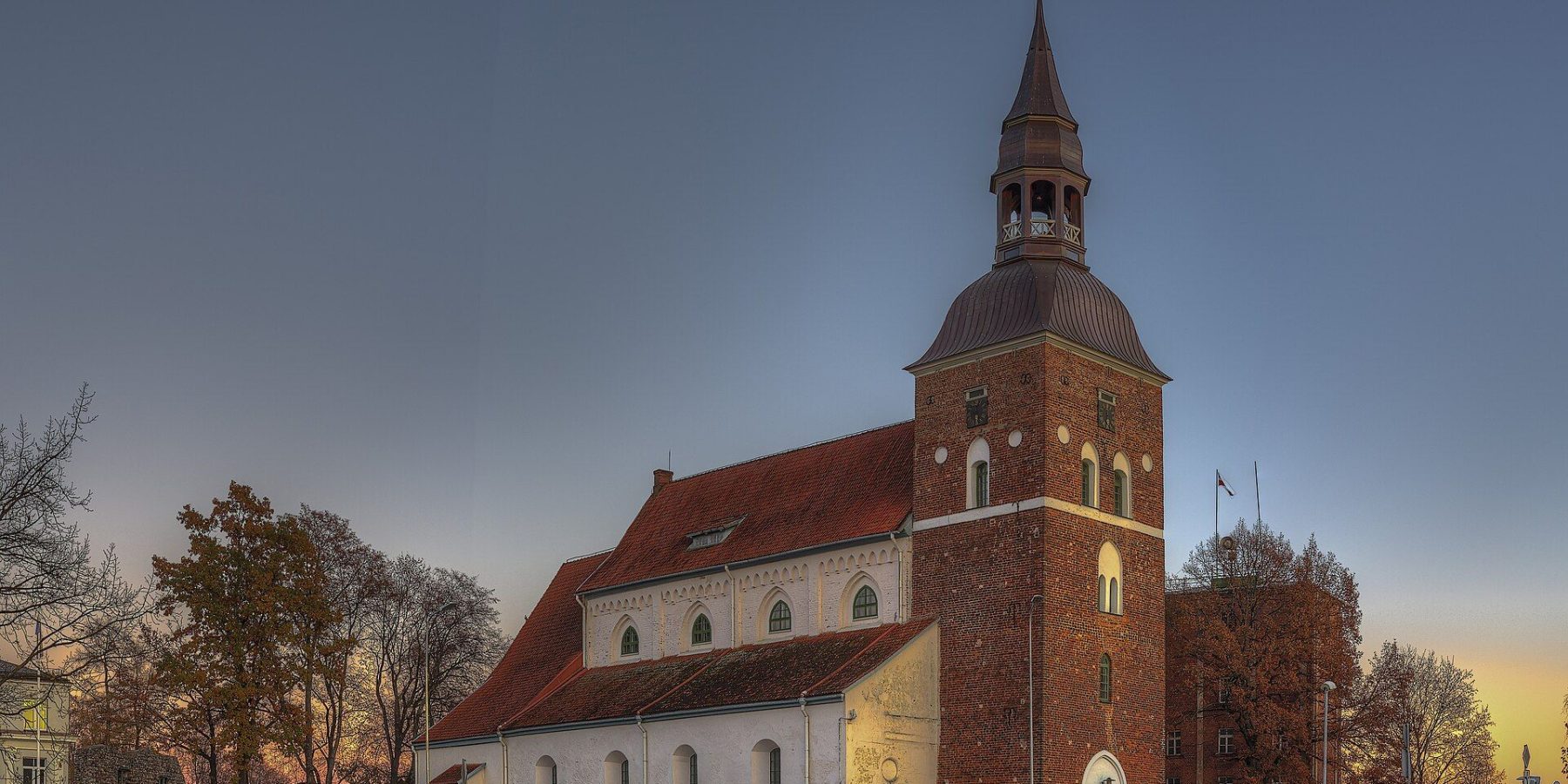
On the steep bank of the Gauja in Valmiera’s old town, St Simon’s Church has stood for more than seven centuries — one of the oldest churches in Latvia and one of the largest Gothic churches outside Riga. Its story includes wars, fires and even conversion into a concert hall, but today it is once again a parish church, with an outstanding Romantic-era organ.
At a glance
| Confession | Evangelical Lutheran |
| Built | Traditionally dated to 1283 |
| Style | Gothic; upper tower from the first half of the 18th century |
| Organ | 33 stops, 3 manuals and pedal, Gothic Revival case |
| Tower | Visitor gallery; recently restored |
| Status | Protected cultural monument |
History: seven centuries of war and peace
The brick church is traditionally dated to 1283, and is thought to take its name from its consecration on the feast of the apostles Simon and Jude, 28 October. A Gothic west tower and polygonal chancel were added in the 14th century, and in the 15th the hall church was converted into a vaulted basilica. In 1554 the Livonian Diet meeting in Valmiera proclaimed freedom of Lutheran worship.
The church was shelled in the Livonian War, burned in 1702 when Russian troops set fire to half the town, and lost its tower to lightning in 1738 — and was rebuilt each time. In 1908 it was renovated for its 625th anniversary. In 1964 the Soviet authorities took it from the parish and, to a design by architect Leonards Liepa, turned it into a concert hall and a branch of the local museum. The parish regained the church in 1988 and held its first service on 18 November.
Interior and organ
Three pairs of octagonal pillars carry the cross-ribbed vaults of the nave. The altar retable was restored in 1739 and the altarpiece in 2001, when a rare stone prayer-candle table designed by architect Ainārs Markvarts was also added.
The first known organ was built in 1780 by Heinrich Andreas Contius, largely paid for by the owner of Kauguri manor. A new organ was installed in 1886, funded by Theodor von Schröder of Kokmuiža manor. The present Romantic-era instrument has 33 stops, three manuals and pedal and is regarded as one of the best in Latvia — you can hear it at services and concerts.
Did you know?
Stone cannonballs are still lodged in the church’s northern buttress — a reminder of the bombardment of 1560 during the Livonian War.
Visiting
- Where: Bruņinieku iela 2, in Valmiera’s old town, next to the Valmiera Museum and the castle ruins.
- When: we could not confirm current published opening hours — contact the parish or the Valmiera tourist information centre before you go.
- Tower: the tower has a visitor gallery with views of the Gauja and the town; after the recent restoration of the tower and bells, check whether it is open.
- Etiquette: please avoid sightseeing during services.
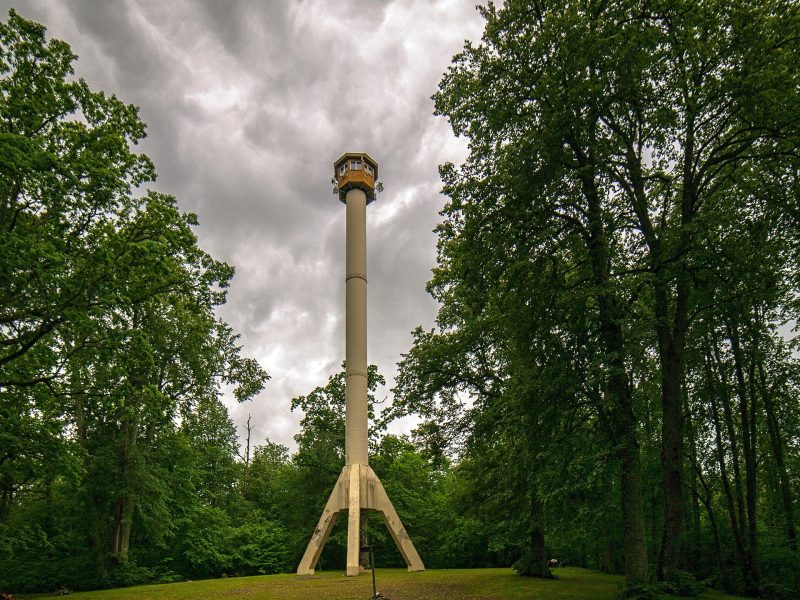
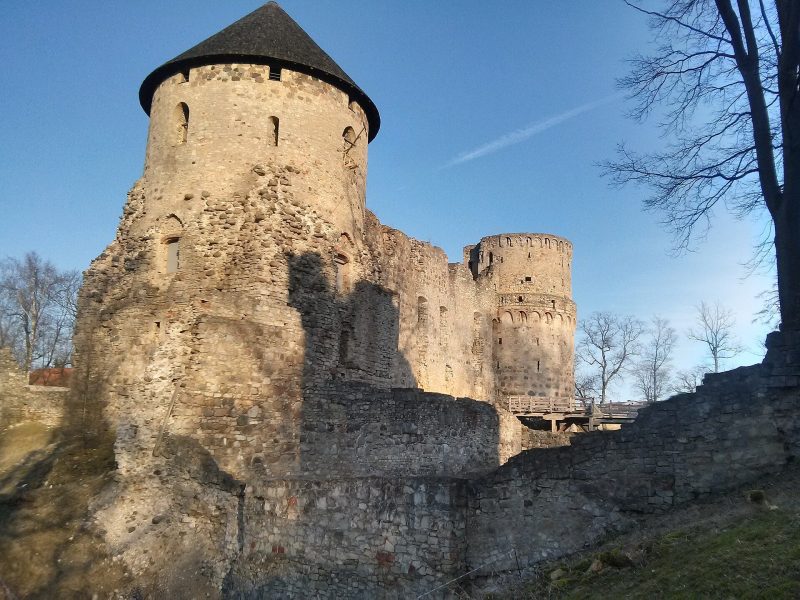
- Combine with: about 15 km to the west is the Zilaiskalns observation tower, and on the way to Riga, Cēsis.
FAQ
How old is St Simon’s Church?
It is traditionally dated to 1283, though historians also suggest earlier dates. It is one of the oldest churches in Latvia.
Why is it called St Simon’s?
By tradition it was consecrated on 28 October, the feast of the apostles Simon and Jude.
Can you climb the tower?
The tower has a visitor gallery, but access has changed during restoration; check with the parish for current information.
Sources: lv.wikipedia.org “Valmieras Svētā Sīmaņa baznīca”; medievalheritage.eu; LSM (reports on the restoration of the tower and bells); baltictrails.eu. Hours can change — check before you go.