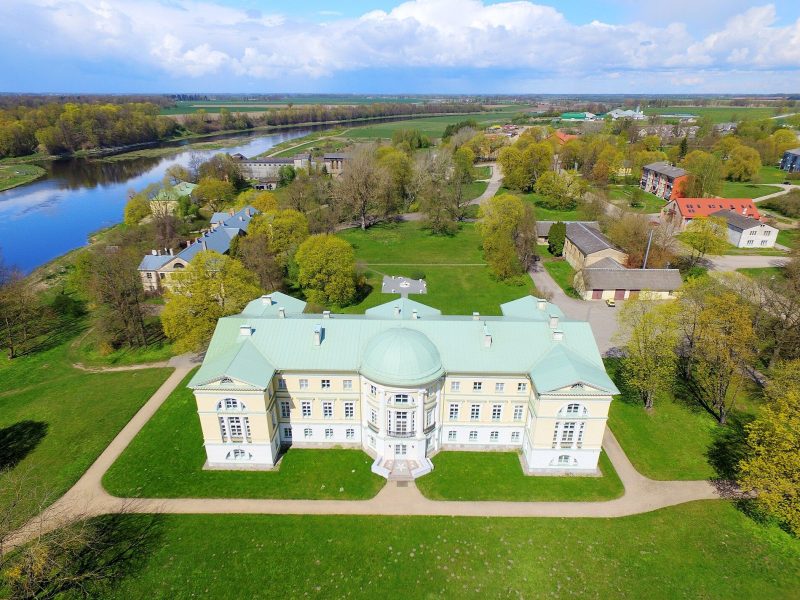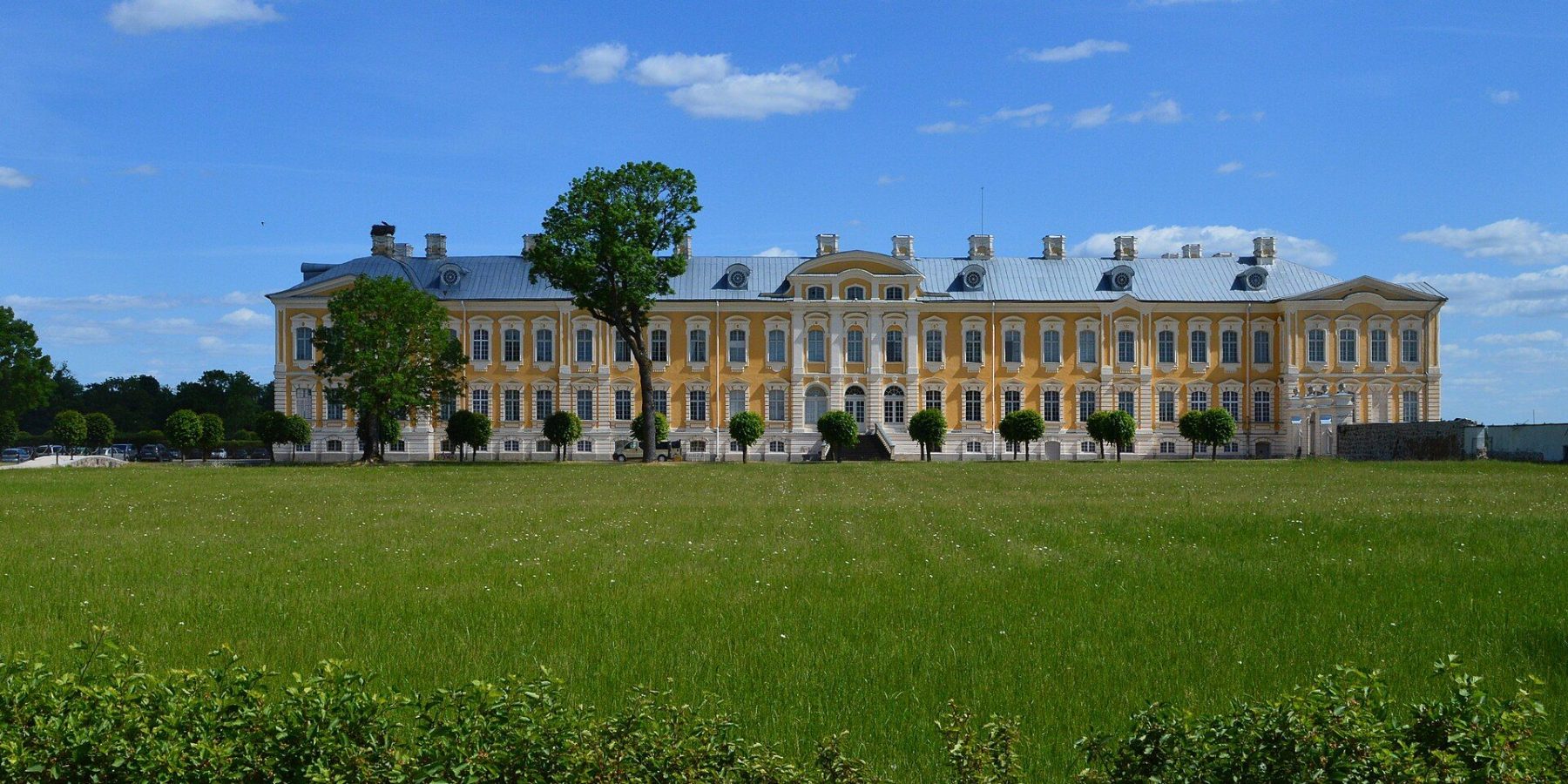
Rundāle Palace is the finest Baroque and Rococo building in the Baltics — the summer residence of Ernst Johann von Biron, Duke of Courland, designed by the Russian court architect Francesco Bartolomeo Rastrelli. With its gilded and white state rooms and a formal French garden, it sits in the flat Zemgale countryside near Bauska.
At a glance
| Location | Pilsrundāle, Rundāle Parish, Bauska Municipality |
| Built | 1736–1740 and 1764–1768 |
| Architect | Francesco Bartolomeo Rastrelli |
| Commissioned by | Ernst Johann von Biron, Duke of Courland |
| Style | Baroque and Rococo |
| Rooms | 138 rooms on two floors |
| What to see | State rooms, the duke’s apartments, French garden with rose garden |
| Time needed | 2–4 hours for palace and garden |
History
Biron’s palace (1735–1772)
Count Ernst Johann von Biron, favourite of Empress Anna of Russia, bought the Rundāle estate on 26 June 1735 for 42,000 thalers. Rastrelli’s design was ready in January 1736 and the foundation stone was laid on 24 May. More than a thousand craftsmen and labourers worked on the site, though materials were often diverted to Jelgava Palace, being built at the same time.
After the coup in St Petersburg on 20 November 1740, Biron was arrested and exiled, and the unfinished palace stood empty. Pardoned, he returned to Courland in January 1763. The second building phase (1764–1768) produced the Rococo interiors: stucco and gilding by Johann Michael Graff and ceiling paintings by the Italians Francesco Martini and Carlo Zucchi. The duke spent his summers here until his death in 1772.
Zubovs, Shuvalovs and the museum
After Courland was annexed by Russia in 1795, Catherine II gave the palace to Count Valerian Zubov; it later passed to his brother Prince Platon Zubov and then to the Shuvalov family, who kept it until the Latvian land reform of 1920. In the 20th century the palace housed a school and, after World War II, a grain store. The Rundāle Palace Museum was founded in 1972, and the restoration — more than four decades of work — was completed in 2014.
What to see
The state rooms
- Gold Hall — the duke’s throne room, with Graff’s gilded stucco and the ceiling painting of the duke’s apotheosis by Martini and Zucchi.
- Grand Gallery — the former banqueting hall; restoring its ceiling painting alone took fourteen years.
- White Hall — first planned as a chapel, turned into a ballroom in the second phase, with white stucco of the seasons, the elements and pastoral scenes.
- Porcelain cabinets — East Asian porcelain vases on dozens of Rococo consoles.
The duke’s apartments and the garden
The central block holds the duke’s state and private apartments; the duchess lived in the west wing. South of the palace lies the French garden, designed by Rastrelli himself. Its restoration began in 1975, the Green Theatre has been recreated, and a rose garden was added in 2005. The palace also hosts museum exhibitions such as the decorative arts display “From Gothic to Art Nouveau”.
Did you know?
The very last building job at Rundāle was fitting the mirrors in the White Hall in 1770 — more than 30 years after the foundation stone was laid.
Visiting
- Getting there: about 80 km from Riga and ~12 km from Bauska; easiest by car. By public transport, take a bus to Bauska and a local bus to Pilsrundāle.
- Opening hours: palace May–October 10:00–18:00, November–April 10:00–17:00; the French garden stays open until 19:00 in June–September (20:00 on summer weekends). Ticket desks close 40 minutes before the museum. Hours and prices change — check rundale.net.
- Tickets: palace main exhibition €12 for adults; French garden (April–October) €6; combined ticket €17. 10% off when buying e-tickets.
- Time needed: 1.5–2 hours for the palace, plus an hour or more for the garden.
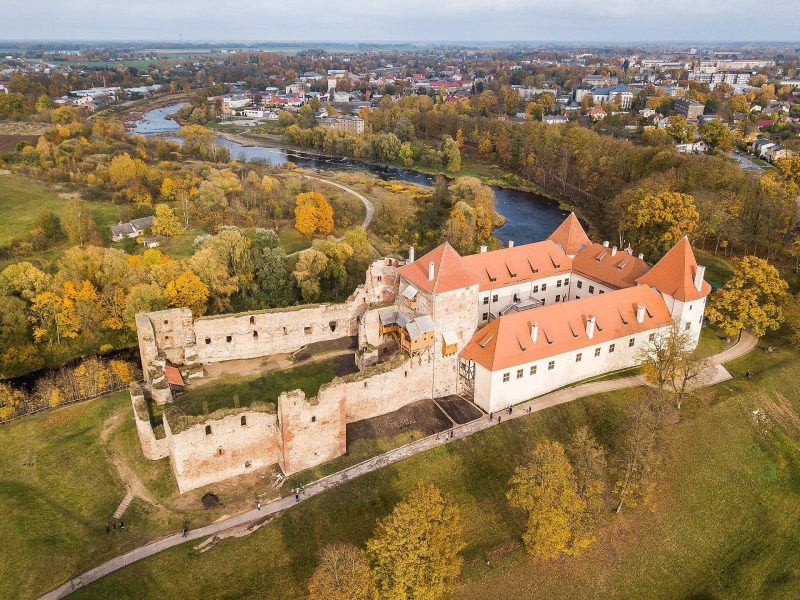
- Combine with: Bauska Castle and Mežotne Palace, which is also run by the Rundāle Palace Museum.
Frequently asked questions
Who designed Rundāle Palace?
Francesco Bartolomeo Rastrelli, the Italian-born Russian court architect who later designed the Winter Palace in St Petersburg.
Is the French garden worth it in winter?
The grounds are open all year, but the garden ticket and the planting are seasonal — it is at its best from late spring to autumn, with roses peaking in midsummer.
How many rooms does the palace have?
138 rooms on two floors; visitors see the state rooms and the duke’s and duchess’s apartments.
Sources: Rundāle Palace Museum official site rundale.net (history, state rooms, French garden, opening hours, price list); lv.wikipedia.org “Rundāles pils”; en.wikipedia.org “Rundāle Palace”.