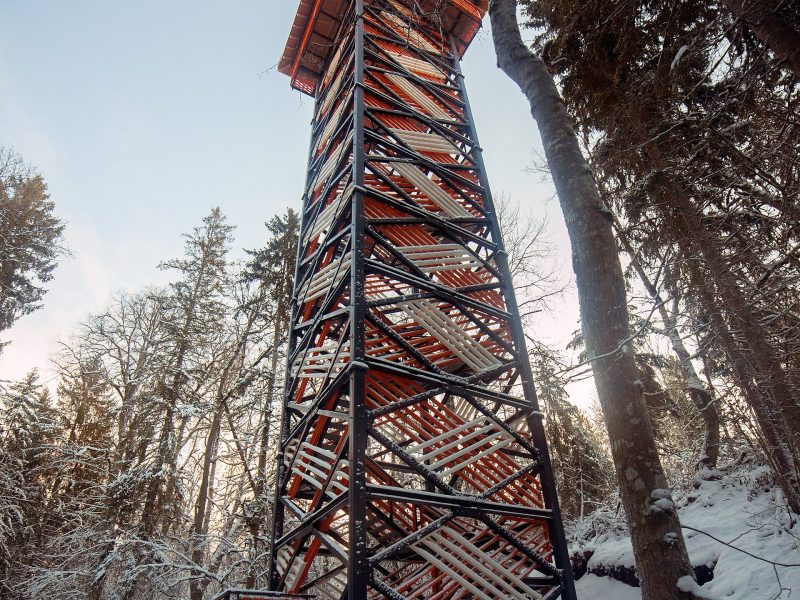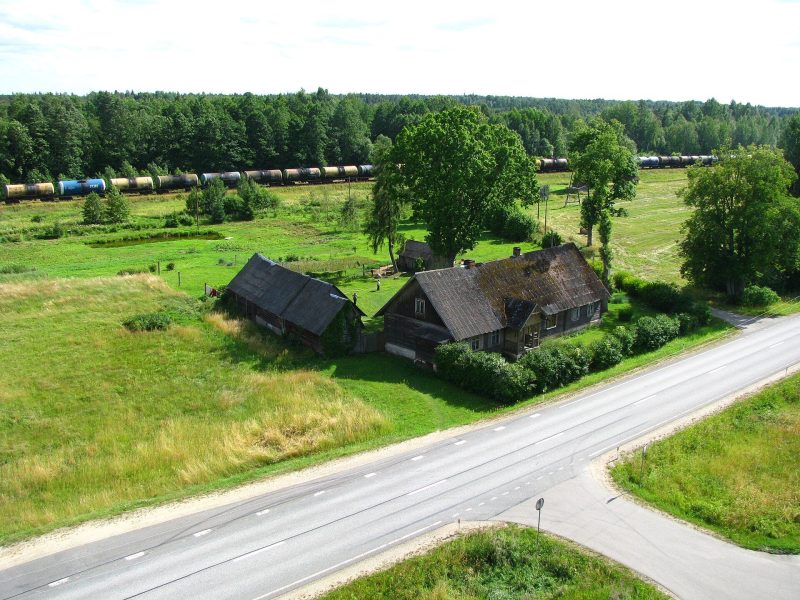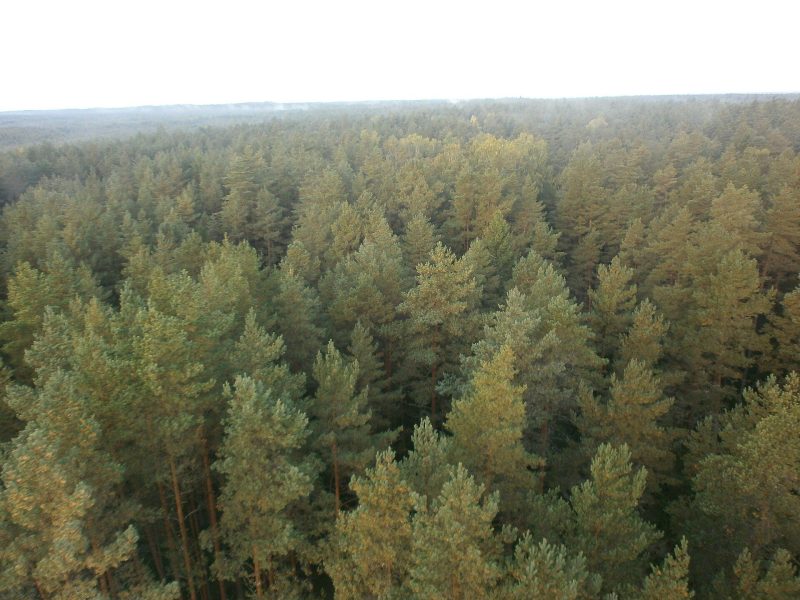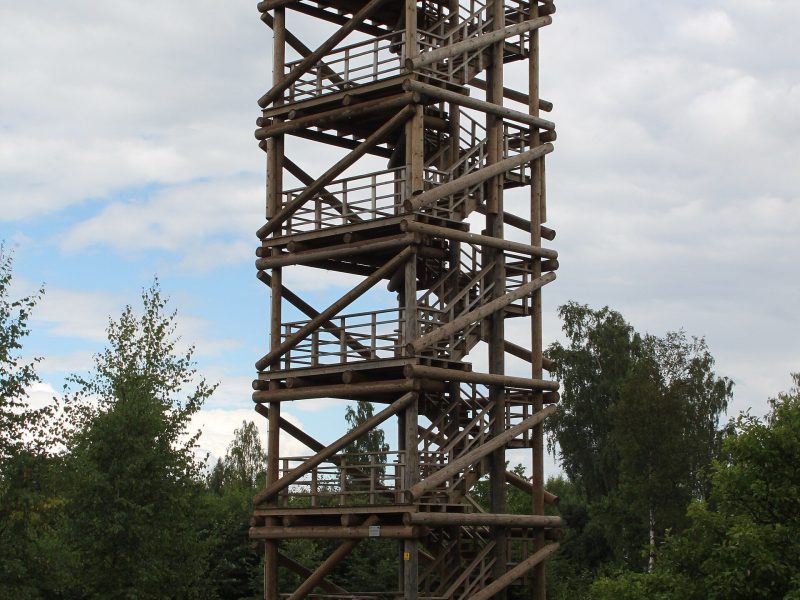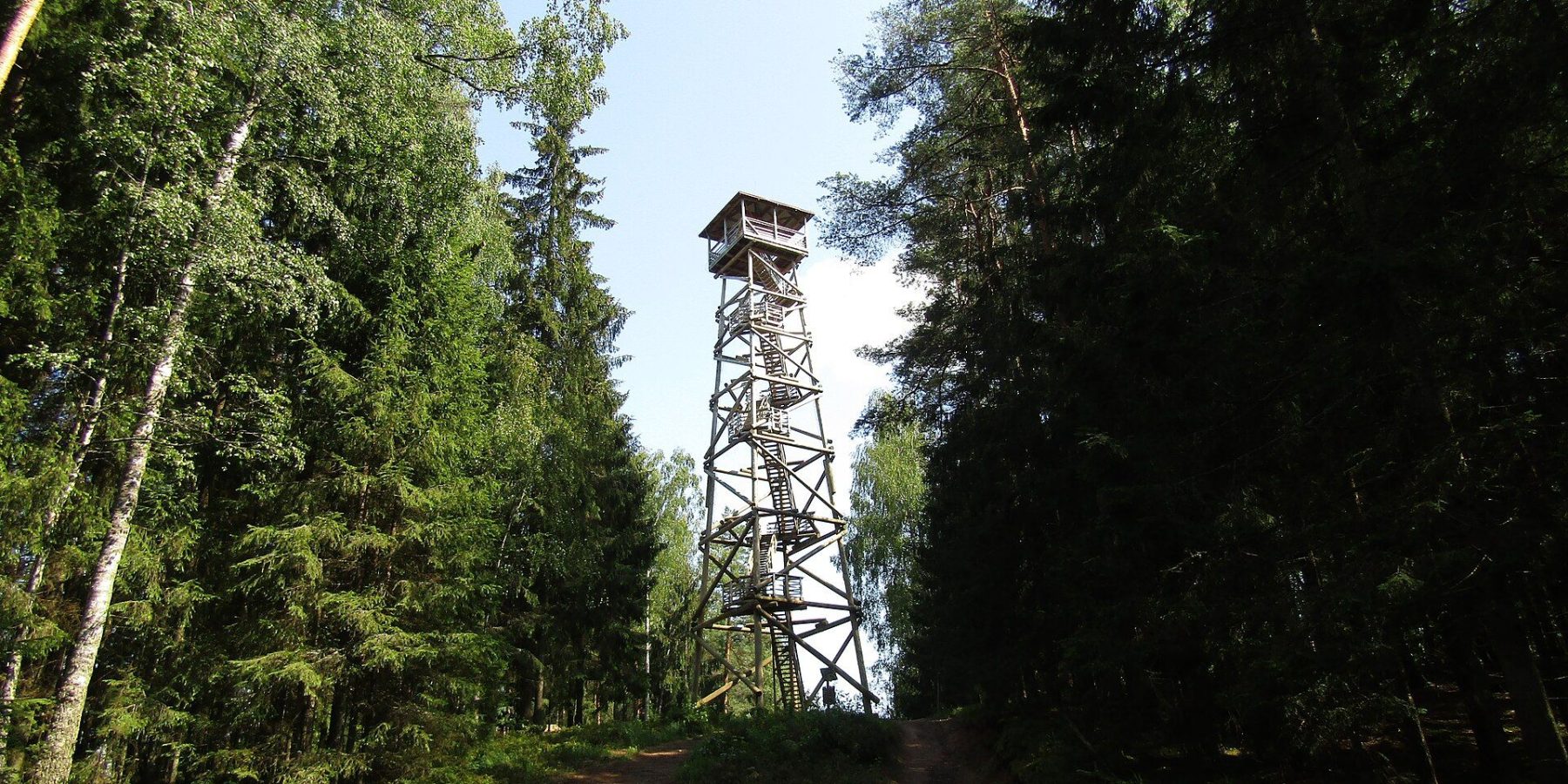
Between Ogre and Ikšķile, in the pine-covered Blue Hills (Zilie kalni), stands a 30-metre timber observation tower. It opened at the end of 2013 on the highest point of the Ogres Zilie Kalni Nature Park, and from the top you see Ogre and the Daugava wrapped in forest and — on a clear day — the towers of Rīga. It is one of the closest proper lookout towers to the capital, and you can get there by train.
At a glance
| Location | Ogres Zilie Kalni Nature Park, western part near the Dubkalni quarry, Ogre municipality |
| Tower height | 30 m |
| Setting | highest point of the park, ~90 m above sea level (per visitogre.lv) |
| Opened | end of 2013 |
| Structure | timber beams joined with threaded rods and bolts; stairs to the top |
| Steps | not officially published |
| What you see | Ogre, the Daugava and the Rīga HPP reservoir, Ikšķile and St Meinhard’s Island, Rīga on clear days |
Hills that are really eskers
The Blue Hills are not hills in the usual sense but a chain of ridge-shaped eskers left by glacial meltwater. The sandy ridges carry mainly pine forest, and it is this esker pine habitat that made the area a nature park in 2004. It covers 312 hectares and is home to six protected plant species, including dwarf birch, sand sainfoin and the meadow pasqueflower.
In ancient times there was a refuge hillfort here. Today walking and cycling paths wind through the park, there is a treetop rope course called “Milžu taka” (Giants’ Trail), and in winter there is a 12 km cross-country ski track between Ikšķile and Ogre, 10 km of it lit from October to mid-March.
The view from 30 metres
The tower is built of timber beams, with stairs leading up to the top platform. It stands right on the crest of the hill, reached by paths and a wooden staircase. At the top the treetops are below your feet and the panorama opens in every direction.
To the east lies Ogre and the banks of the Daugava; to the west, Ikšķile and the Rīga HPP reservoir with St Meinhard’s Island. On a clear day the Rīga skyline and the Zaķusala TV tower appear on the horizon, and in the other direction you can pick out the Ķegums hydropower plant.
There are rules for the tower: no more than 20 people at the top at once, children under 16 only with an adult, and no climbing in strong wind, storms or when the steps are slippery or icy. According to a 2016 notice from the operator, the tower is inspected every year and its joints re-tightened.
Did you know?
The Blue Hills have a winter-sports past: a ski jump was built here in 1934 and taken down in the early 1950s. Today the winter crowd are cross-country skiers on the floodlit track.
Visiting
- Getting there: the Blue Hills lie between Ikšķile and Ogre, about 35 km from Rīga. Take the train to Ikšķile or Ogre and walk in along the park trails, or drive to the nature park car parks.
- Hours and price: no official opening hours or entry fee are published — the tower stands in the nature park. For current information see visitogre.lv or contact the Zilie kalni operator (info@ziliekalni.lv).
- Safety: don’t climb in strong wind, storms or on icy steps; children under 16 only with an adult; no more than 20 people at the top.
- Accessibility: stairs only, no lift; the climb up the slope on wooden steps is not suitable for wheelchairs.
- Time needed: an hour with a walk in the park; longer if you add the Dubkalni reservoir or the rope course.
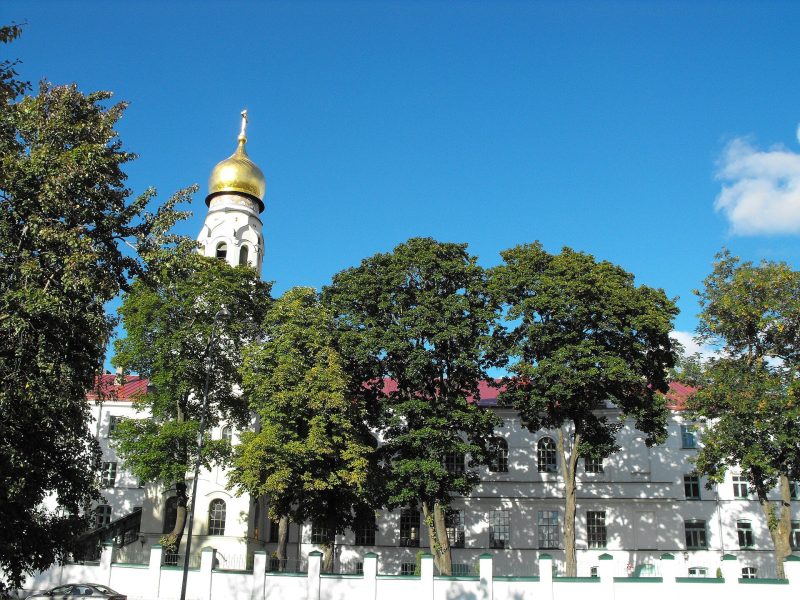
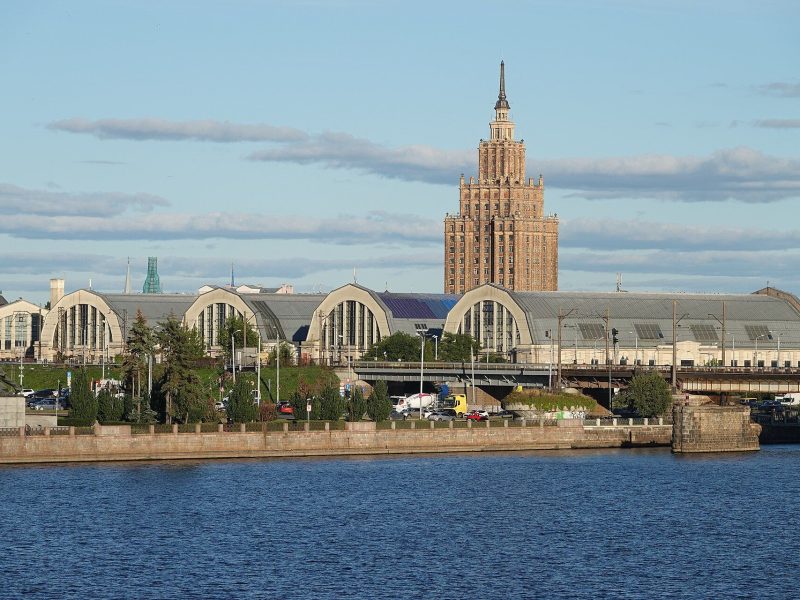
- Combine with: another esker landscape and a 33 m tower at Lielie Kangari; in Rīga, the Academy of Sciences viewing platform or St Peter’s Church tower.
FAQ
How tall is the Blue Hills tower?
The tower is 30 metres tall and stands on the highest point of the nature park, about 90 m above sea level.
Can you see Rīga from the tower?
Yes. On a clear day you can see the Rīga skyline and the Zaķusala TV tower, as well as Ogre, Ikšķile and the Rīga HPP reservoir.
Can you climb it in winter?
The tower is out in nature, but the rules forbid climbing when the steps are slippery or icy or in strong wind. In winter, judge the conditions and take care.
Sources: visitogre.lv (Blue Hills observation tower, Ogres Zilie Kalni Nature Park, 2016 notice on tower safety); lv.wikipedia.org “Ogres Zilie kalni”; celotajs.lv; redzet.lv; Wikimedia Commons photos taken from the tower; OpenStreetMap.