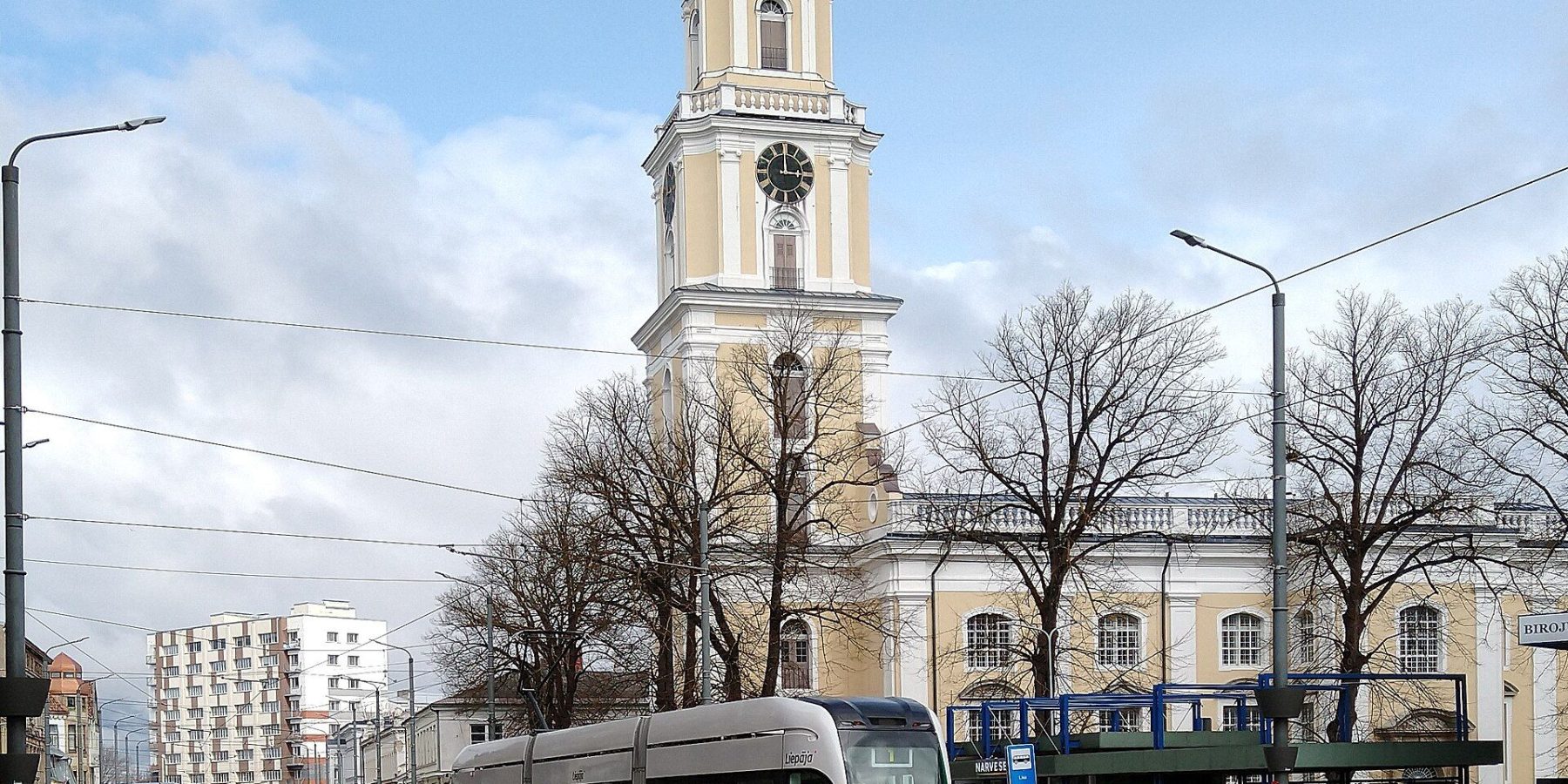
On Lielā iela in Liepāja’s old town stands a church whose sober 18th-century exterior gives little away — step inside and you meet a blaze of gilded Rococo. Holy Trinity Cathedral also holds one of Latvia’s great treasures: an organ with 131 stops that was the largest in the world until 1912 and is still regarded as the largest mechanical organ never to have been rebuilt.
At a glance
| Confession | Evangelical Lutheran; cathedral of the Diocese of Liepāja |
| Built | 1742–1758, consecrated 5 December 1758 |
| Architect | Johann Christoph Dorn of Königsberg |
| Style | Late Baroque with Classicist touches; Rococo interior |
| Organ | H. A. Contius (1779), enlarged 1885: 131 stops, 4 manuals, over 7,000 pipes |
| Tower | About 55 m, open for climbing |
History
Liepāja’s council proposed a new church in 1741, and the foundation stone was laid on 19 July 1742. The design came from Königsberg master mason Johann Christoph Dorn — the town picked the more elaborate of his two proposals. The church was consecrated on 5 December 1758, though the tower still lacked its two upper storeys and only the pulpit had been gilded. Gilding continued into the mid-1770s.
In 1865–1866 the church was remodelled to a design by Otto Dietze, and the tower gained two storeys, reaching almost 55 metres; a clock followed in 1906. The latest major restoration of the façade and tower was completed in spring 2020. Today it is the cathedral of the Liepāja diocese of the Evangelical Lutheran Church of Latvia.
Interior and organ
Inside, look for the 13-metre altar, the pulpit and the upper-floor box built for the Dukes of Courland. The carving and gilding make this one of the richest Rococo interiors in Latvia.
The organ began as an instrument by Heinrich Andreas Contius, delivered in 1779. In 1885 Barnim Grüneberg of Stettin enlarged it to 131 stops, four manuals and more than 7,000 pipes. It is the only organ where pipes made by Contius still sound. You can hear it at services, in the summer concert series “Mūzika dievnamam” and at the international organ festival held each September.
Did you know?
A plaque in the cathedral honours the Finnish Jägers — volunteers who, in Liepāja in 1918, swore allegiance to the government of newly independent Finland before leaving to fight in the Finnish Civil War.
Visiting
- Where: Lielā iela 9, in the heart of the old town; the tram runs along Lielā iela.
- Hours: 1 June–31 October Tue–Sat 10:00–18:00, Sun 12:00–15:00, closed Mon. Shorter hours out of season — check trinitatis.lv or call +371 20006370.
- Price: entry to the church by donation; tower €3 for adults, €1 for pupils, students and seniors, free under 6.
- Organ: a short organ demonstration can be booked for groups in advance (up to 20 people €40).
- Etiquette: avoid sightseeing during services and keep your voice low.
FAQ
Can you climb the tower?
Yes — in season the tower is open for a small fee, with views over Liepāja and towards the sea.
Is it the world’s largest organ?
It was until 1912. Today it is regarded as the largest historic mechanical organ that has never been rebuilt.
When can I hear the organ?
At services, during the “Mūzika dievnamam” summer concerts and at the September organ festival. See trinitatis.lv for dates.
Sources: trinitatis.lv; liepaja.travel; latvia.travel; lv.wikipedia.org and en.wikipedia.org “Holy Trinity Cathedral, Liepāja”; LSM (2018). Hours and prices can change — check before you go.