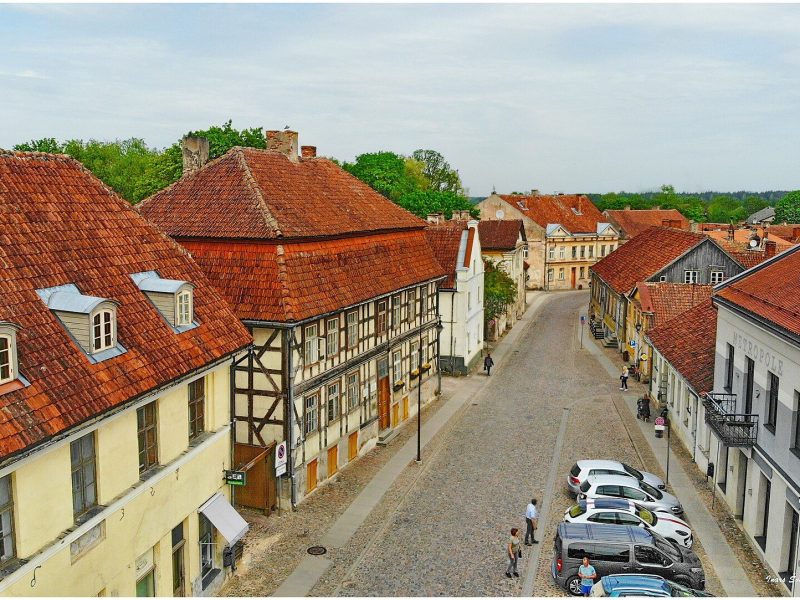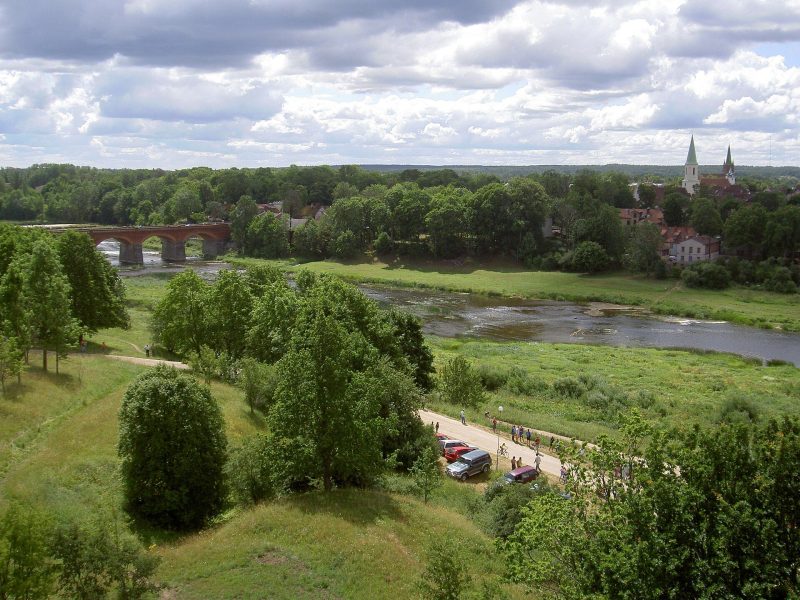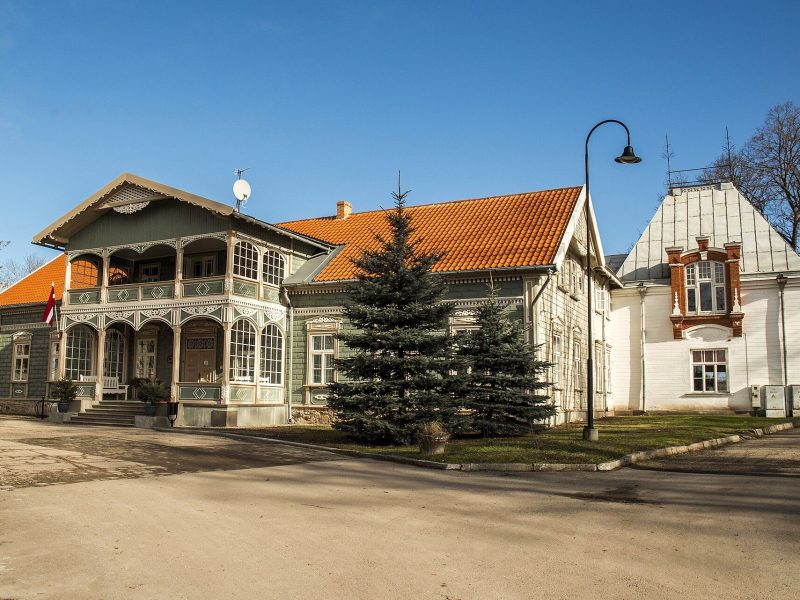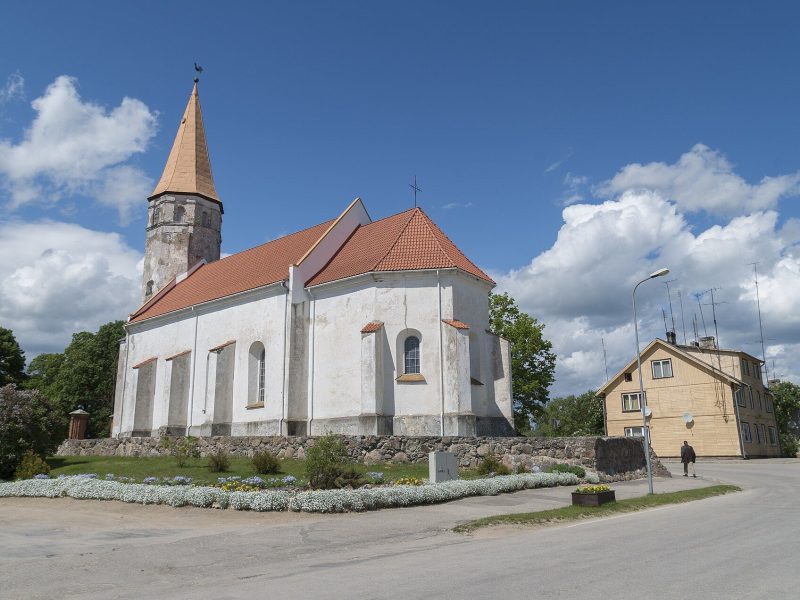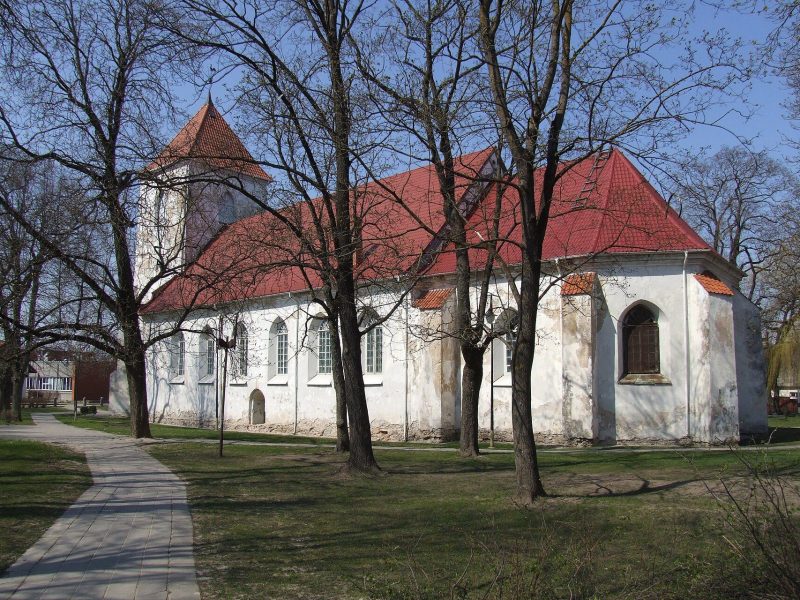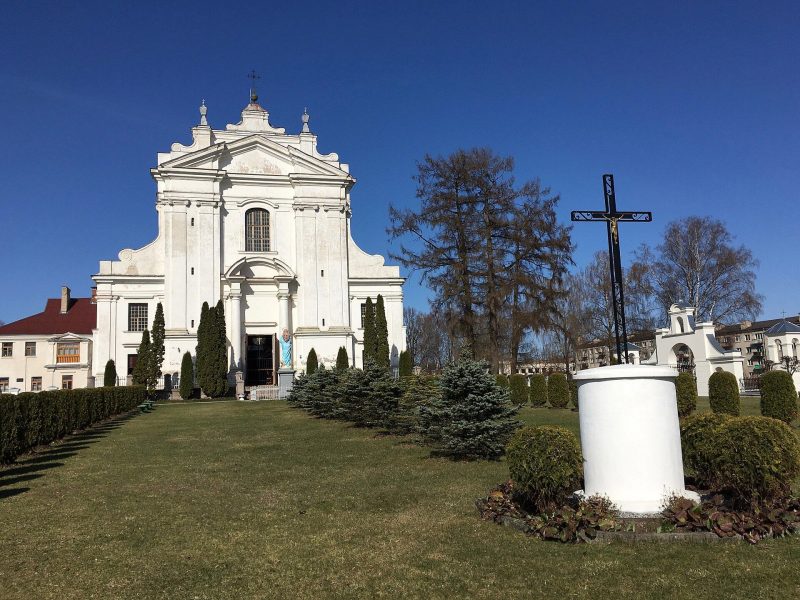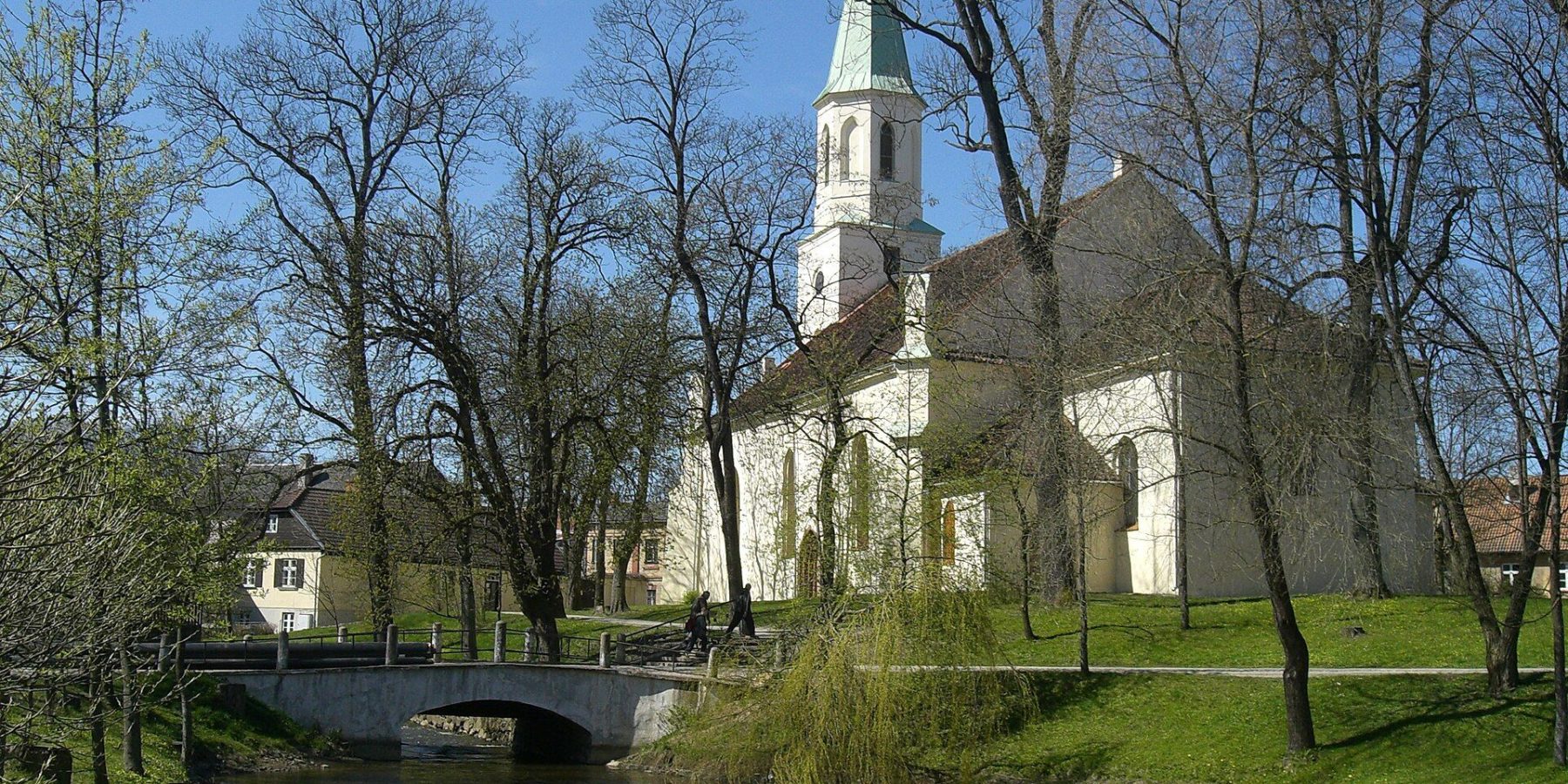
In Kuldīga’s old town stands the town’s oldest place of worship — St Catherine’s Evangelical Lutheran Church. St Catherine is Kuldīga’s patron saint and appears on the town’s coat of arms. Behind a plain exterior lies one of Courland’s finest ensembles of Mannerist woodcarving, and from the tower you look out over the red roofs of the old town.
At a glance
| Confession | Evangelical Lutheran (Kuldīga St Catherine’s parish) |
| First mentioned | 18 October 1252 |
| Brick church | Begun c. 1655, opened 1665; restored by 1672 after the 1669 fire |
| Tower | Present form from the 1866 rebuild; open for climbing |
| Interior | Altar and pulpit (1660) by Ventspils carver Nikolaus Söffrens the Elder |
| Size and status | 41 × 21 m; architectural monument of national importance |
History: from wooden church to brick
The church is first mentioned in writing on 18 October 1252. It began as a wooden building that was rebuilt several times; in 1567 a new wooden church with two towers went up, but in the great fire of 1615 both towers burned and the bells melted. Work on the present brick church most likely began in 1655. It was interrupted by the Second Northern War, and the church opened in 1665.
On 14 September 1669 fire destroyed the tower, the organ and the tower clock — only the altar and pulpit were saved. The church was restored within three years. A pyramid roof was added to the tower in 1748, and the major renovation of 1866 produced the slender spire you see today along with Gothic Revival touches. After the Second World War the church served as a grain store, then passed to the Kuldīga museum and was used as a concert hall. Services resumed in 1989, and the parish regained the building in 1990.
Altar, pulpit and painted organ loft
The interior’s chief treasure is the altar and pulpit carved in 1660 by Nikolaus Söffrens the Elder of Ventspils. They are a late example of Mannerism, both decorated with figures of the Evangelists. The altar holds the paintings “Christ at the Last Supper” and “Christ on the Way to Golgotha”, painted by J. Špērs in 1851, while the lower painting of the Last Supper dates from around 1672.
The organ, its case and ten painted organ-loft panels are also listed as protected works of art. Squat columns on tall pedestals, a reserved exterior and a richly carved interior are typical of Courland’s Baroque churches.
Did you know?
Local legend says the church is named after a woman called Catherine who paid for its construction. Duke Jacob Kettler of Courland was born in Kuldīga in 1610, and travel guides note that he was baptised in St Catherine’s.
Visiting
- Where: Baznīcas iela 31/33, in Kuldīga’s old town, a few minutes’ walk from the Town Hall Square.
- When: visits by prior arrangement, tel. +371 22329171; service times at kuldigas.lelb.lv.
- Tower: climbing costs €1, children free.
- Etiquette: no sightseeing during services; keep your voice down.
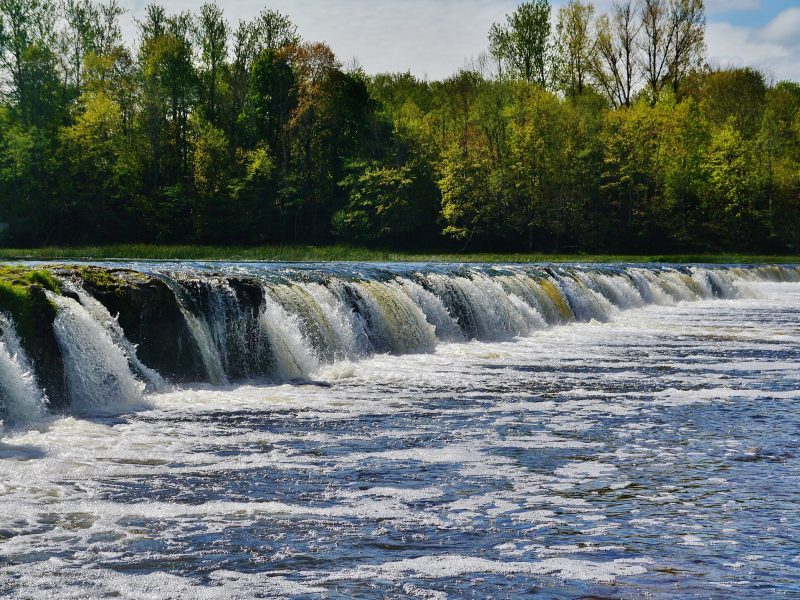
- Combine with: our guide Things to do in Kuldīga covers the whole old town; the Venta Rapid and Kuldīga observation tower are close by.
FAQ
Can you climb the tower?
Yes, for €1 (children free). As visits are by arrangement, phone the parish in advance.
How old is the church?
The first written record dates from 1252, when a wooden church stood here. The present brick building dates from the second half of the 17th century.
What is the most valuable part inside?
The altar and pulpit made in 1660 by Nikolaus Söffrens the Elder of Ventspils, which survived the fire of 1669.
Sources: visitkuldiga.com; kuldigas.lelb.lv; lv.wikipedia.org “Kuldīgas Svētās Katrīnas baznīca”; celotajs.lv; likumi.lv (list of protected works of art). Hours and prices can change — check before you go.