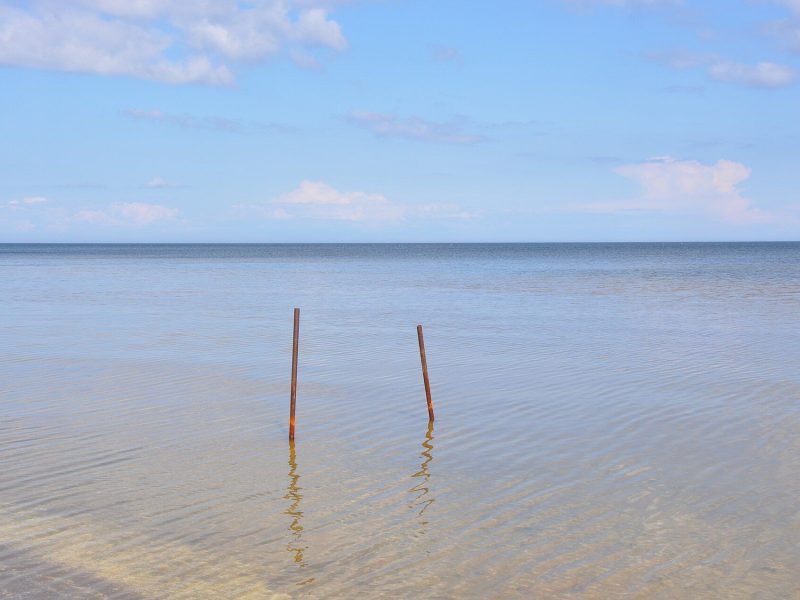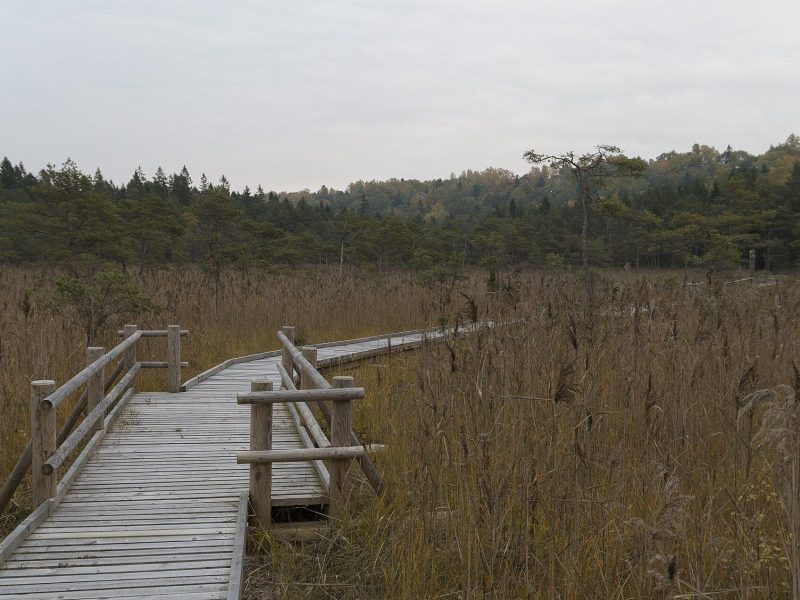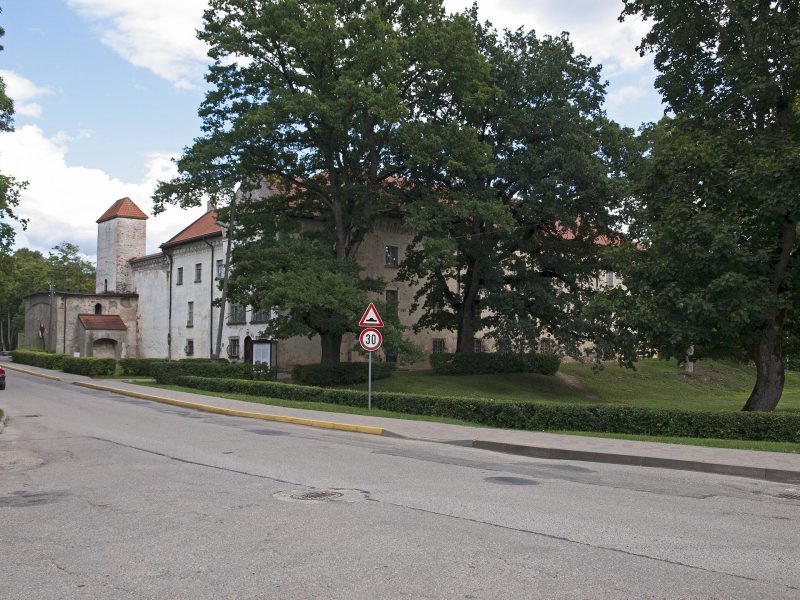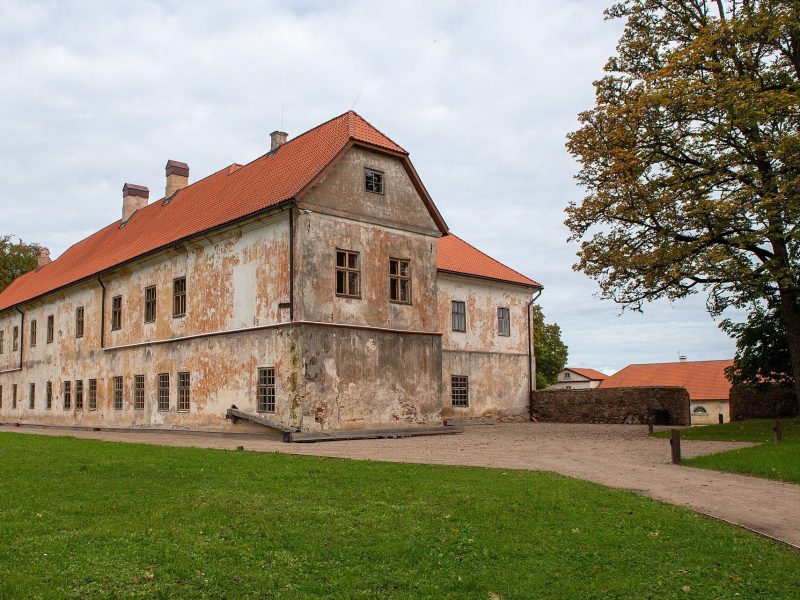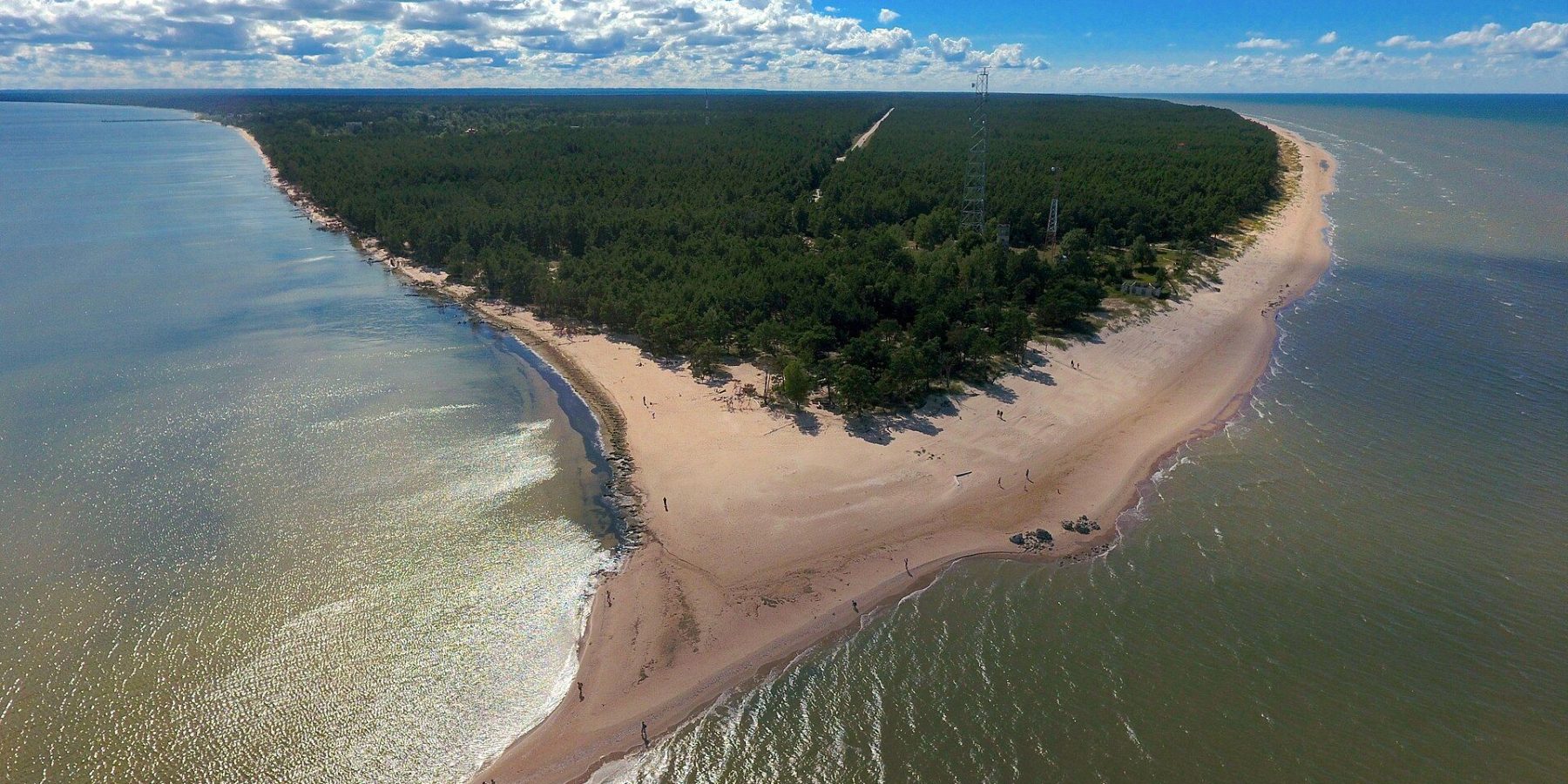
Cape Kolka is the northern tip of the Courland peninsula — the place where the open Baltic Sea meets the Gulf of Riga. On a clear day you can see waves running towards each other from both sides, with Kolka lighthouse standing out at sea. Expect wind, storm-felled trees on the beach, Livonian heritage and one of the best bird-migration watching spots in Latvia.
At a glance
| Location | Kolka parish, Talsi municipality — Slītere National Park |
| What it is | the northern cape of Courland, between the Baltic Sea and the Gulf of Riga |
| Shoal | an underwater sandbank running about 6–7 km north-east |
| Kolka lighthouse | on an artificial island about 5 km offshore; lit since 1 July 1884 |
| Livonian name | Kūolka nanā |
| Visiting | open access; swimming at the tip is dangerous |
Where two seas meet
From the cape a shoal on a dolomite base runs about 6–7 km out to sea, with Kolka lighthouse at its end. The cape was historically known as Domesnes, and the Mervalla runestone in Sweden, dated to around 1040, mentions a Viking named Sven who sailed around it (Tumisnis). Countless ships have been wrecked on the shoal, which locals called “the nose of the evil giant Tom”.
The coastline is constantly on the move. Hundreds of thousands of cubic metres of sand are carried along the shore towards the cape each year; storms bury tree trunks in sand, while elsewhere the sea eats into the shore — the tip of the cape has retreated markedly in recent years. The fallen trees and roots on the beach are part of what makes Kolka look the way it does.
What to see and do
- The tip of the cape — watch the waves of the two waters collide; in storms they can reach several metres.
- Kolka lighthouse — a 21 m tower on an artificial island built in 1873–1875 from boulders hauled over the winter ice. It is visible from the shore but cannot be reached without a boat.
- Memorial to those lost at sea — a memorial stone by sculptor Ģirts Burvis near the cape.
- Birdwatching — the cape’s “bottleneck” effect concentrates migrating birds.
- The Livonian Coast — to the west lie the old Livonian fishing villages of Vaide, Saunags, Pitrags, Košrags and Sīkrags.
Bird migration and when to go
One of the most important migratory bird routes crosses Slītere National Park, and in spring the shape of the cape funnels birds over a narrow strip of land. According to the Nature Conservation Agency, during active migration several tens of thousands of birds an hour can fly over Cape Kolka. Spring (especially April) is the best time for birdwatching, with mornings the busiest. In summer the cape is a quiet beach; in autumn and winter it is a windswept, dramatic sight with storm waves.
Did you know?
Kolka lighthouse stands on an artificial island about 5 km offshore. The island took several winters to build, with stones carried across the frozen sea, and the light was first lit on 1 July 1884.
Visiting
- Getting there: by car along the Gulf of Riga coast via Tukums and Roja, or via Talsi and Dundaga; from Riga the drive takes over two hours.
- Parking: near the cape on the village side, followed by a forest path and the beach to the tip. Check any parking fee on site.
- Admission: open access.
- Safety: currents meet at the tip and create whirlpools — swimming there is dangerous.
- Time needed: an hour for the cape itself; half a day or more with the Livonian Coast and Slītere National Park trails.
- Accessibility: the last stretch is a sandy path and beach — difficult with a wheelchair.
- Combine with: a Courland road trip to the Venta Rapid in Kuldīga.
FAQ
Can you swim at Cape Kolka?
Not at the tip: where the Baltic Sea and the Gulf of Riga meet, dangerous whirlpools form. Swim further away from the cape.
Can you walk to Kolka lighthouse?
No. It stands on an artificial island about 5 km offshore and can only be seen from the shore.
When is the best time for birds?
During spring migration, especially in April. Mornings are the most active.
Sources: lv.wikipedia.org “Kolkasrags”; en.wikipedia.org “Cape Kolka”, “Kolka Lighthouse”; celotajs.lv (Cape Kolka, Kolka lighthouse); Nature Conservation Agency materials on Slītere National Park (daba.gov.lv).