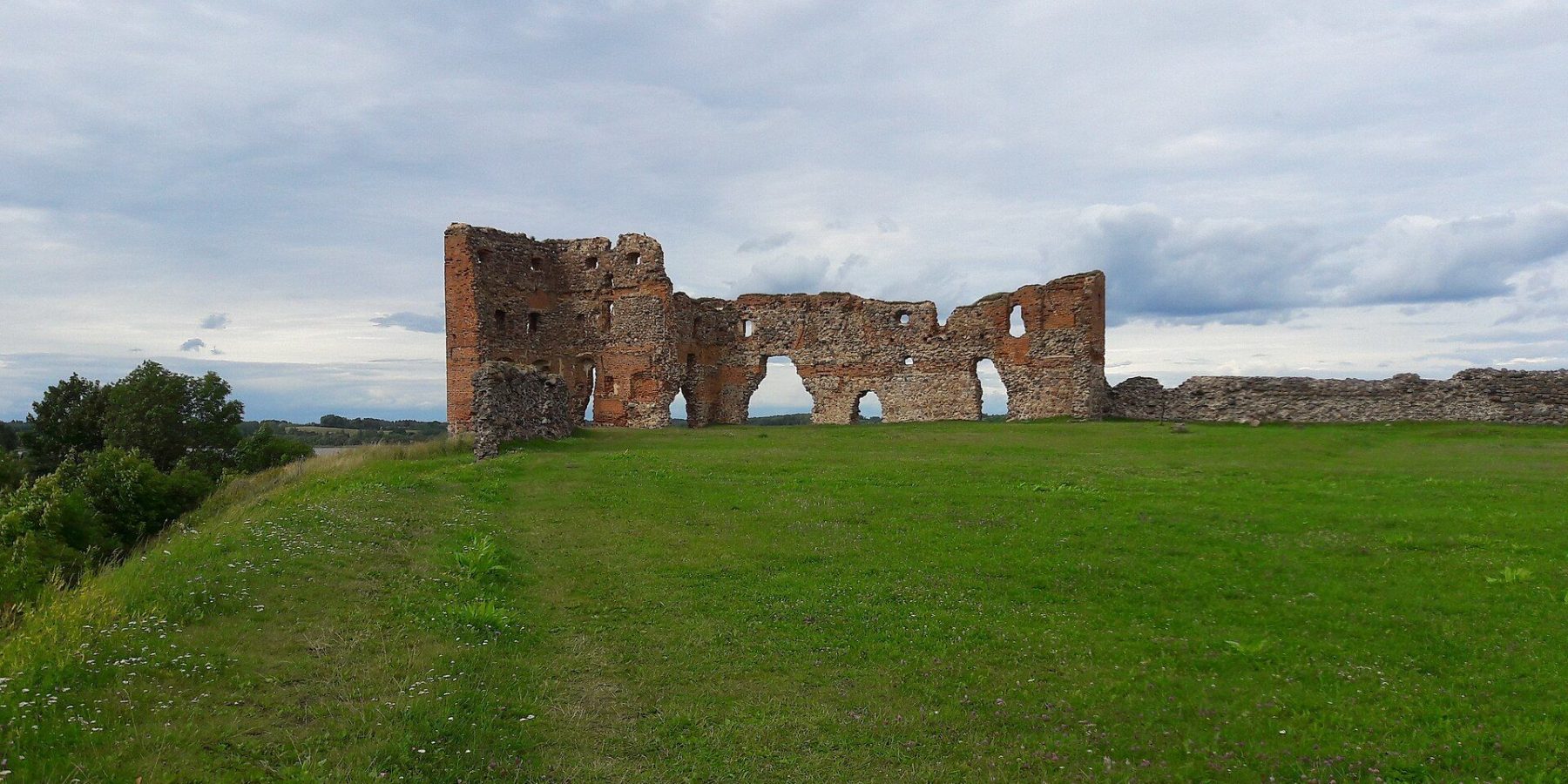
In the centre of Ludza, on a hill between Lake Mazais Ludzas and Lake Lielais Ludzas, stand the ruins of a Livonian Order castle — the town’s symbol and the main sight of the Ludza area. The castle guarded the Order’s eastern frontier against Pskov and Moscow, and its walls survived several sieges before being abandoned in the 17th century. From the hill you look out over both lakes and the old town.
At a glance
| Location | Baznīcas iela, Ludza — next to the Catholic church, on a hill between two lakes |
| Built | 14th century (dated by its architecture); first recorded in 1433 |
| Builder | The Livonian Order, on the site of a Latgalian wooden fort |
| Layout | Three-storey stone castle with six towers and three gates |
| Abandoned | After the siege of 1654 and a decision of the Polish Sejm in 1667 |
| Surviving | Two walls of a tower and sections of the outer wall up to three storeys high |
History
A frontier fortress of the Order
The castle was built where a Latgalian wooden fort once stood. No records of its construction survive — from the brickwork and architecture researchers date it to the 14th century, and it is first mentioned in 1433. It strengthened Livonia’s eastern border and controlled trade routes from Russia, and was administered under the Order’s bailiff in Rēzekne.
It was built of grey fieldstone and red brick, decorated with black glazed bricks. In 1463 Pskov built its own fortress of Krasnygorodok directly opposite, and in 1481 a large Russian army took and devastated the castle. The Order rebuilt it in 1525, once relations with Moscow had improved.
Sieges and decline
At the start of the Livonian War in 1558 Muscovite troops took the castle; on 25 July 1577 it fell to the army of Ivan the Terrible, and in 1582 it returned to Poland–Lithuania. An inventory of 1599 describes wooden turrets on the walls, a large brick tower and oak gates.
On 22 December 1654, after a siege led by Lev Saltykov, the castle surrendered; a tower was blown up during the siege. In 1667 the Polish Sejm decided to maintain only the fortress of Daugavpils in Latgale, and Ludza Castle was abandoned and gradually fell into ruin.
What to see
- The ruins — two walls of a tower and sections of the outer wall, some up to three storeys high.
- Viewing platform — built on the castle hill during recent conservation and landscaping, overlooking both Ludza lakes.
- Footbridge and lighting — an improved pedestrian bridge and floodlit walls let you see the ruins after dark too.
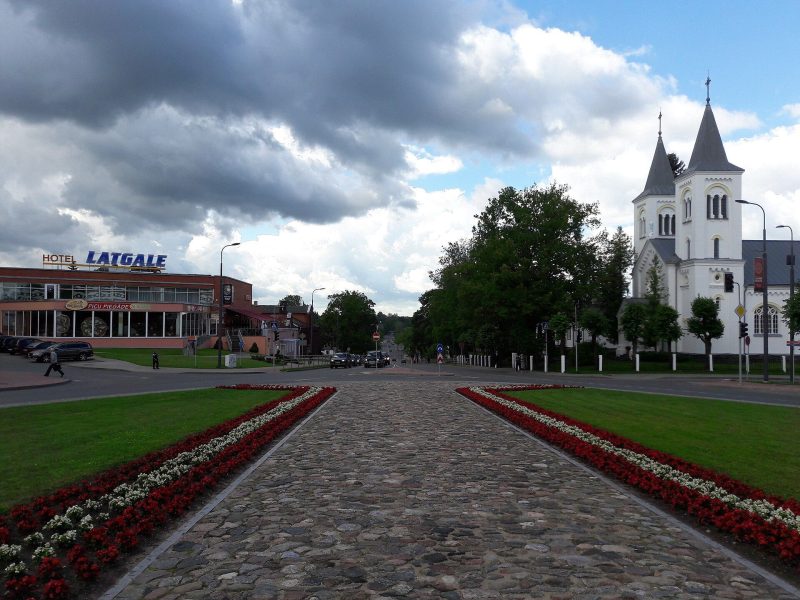
- Old town — the Catholic church and Ludza’s historic centre lie at the foot of the hill.
Did you know?
Archaeological digs at Ludza Castle took place in 1976 and in 2013–2014, while local legends tell of a prince and an enchanted princess who live in the castle hill.
Visiting
- Where: Baznīcas iela, central Ludza, next to the Catholic church.
- Hours and admission: official tourism sources list no opening hours or entry fee for the ruins — ask the Ludza tourist information centre about tours and current details, tel. +371 65707203, tic@ludza.lv.
- Tip: come back in the evening to see the walls lit up.
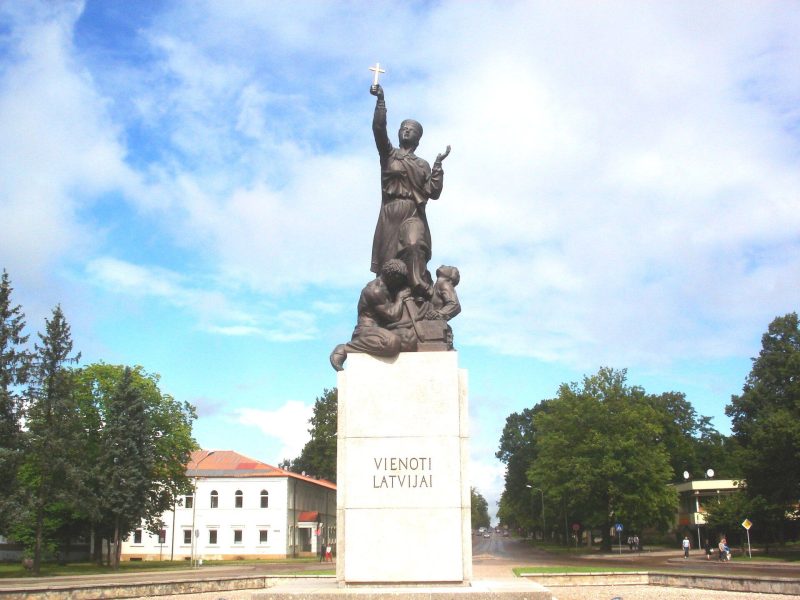
- Combine with: things to do in Rēzekne and the Māra of Latgale monument.
FAQ
When was Ludza Castle built?
The exact year is unknown. Its architecture points to the 14th century, and the first written record is from 1433. Some tourism sources give 1399.
Why was the castle abandoned?
It was badly damaged in the siege of 1654, and in 1667 the Polish Sejm decided to keep only the Daugavpils fortress in Latgale.
Can you see the lakes from the hill?
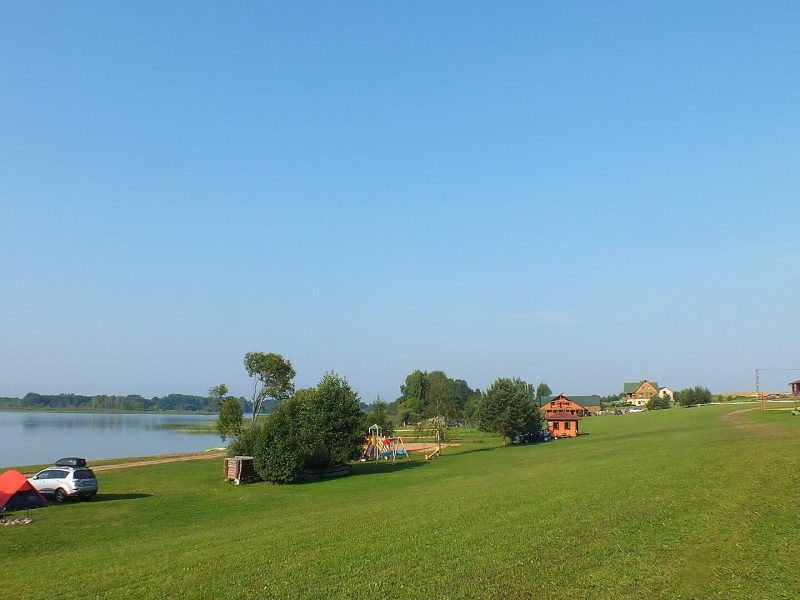
Yes — the castle stands between Lake Mazais Ludzas and Lake Lielais Ludzas, and both are visible from the hill and viewing platform.
Sources: visitludza.lv; lv.wikipedia.org “Ludzas viduslaiku pils”; en.wikipedia.org “Ludza Castle”; redzet.lv. Information can change — check before you go.