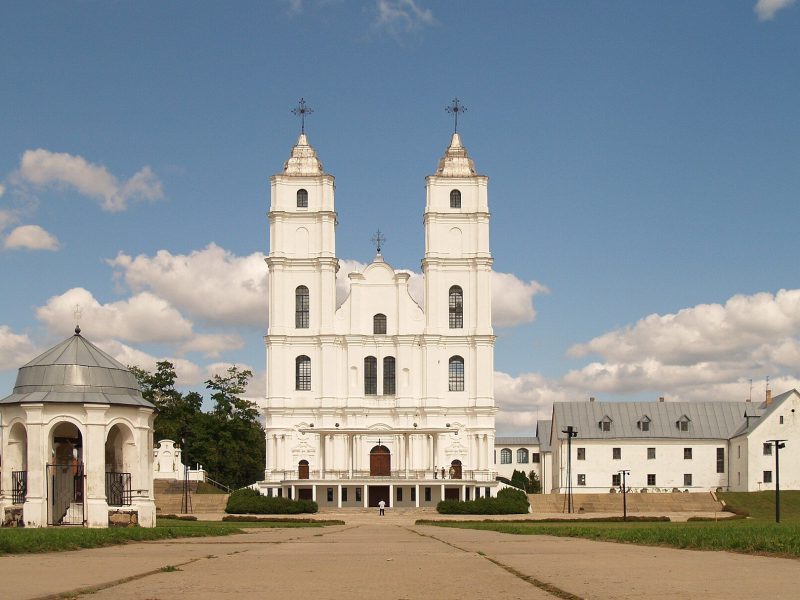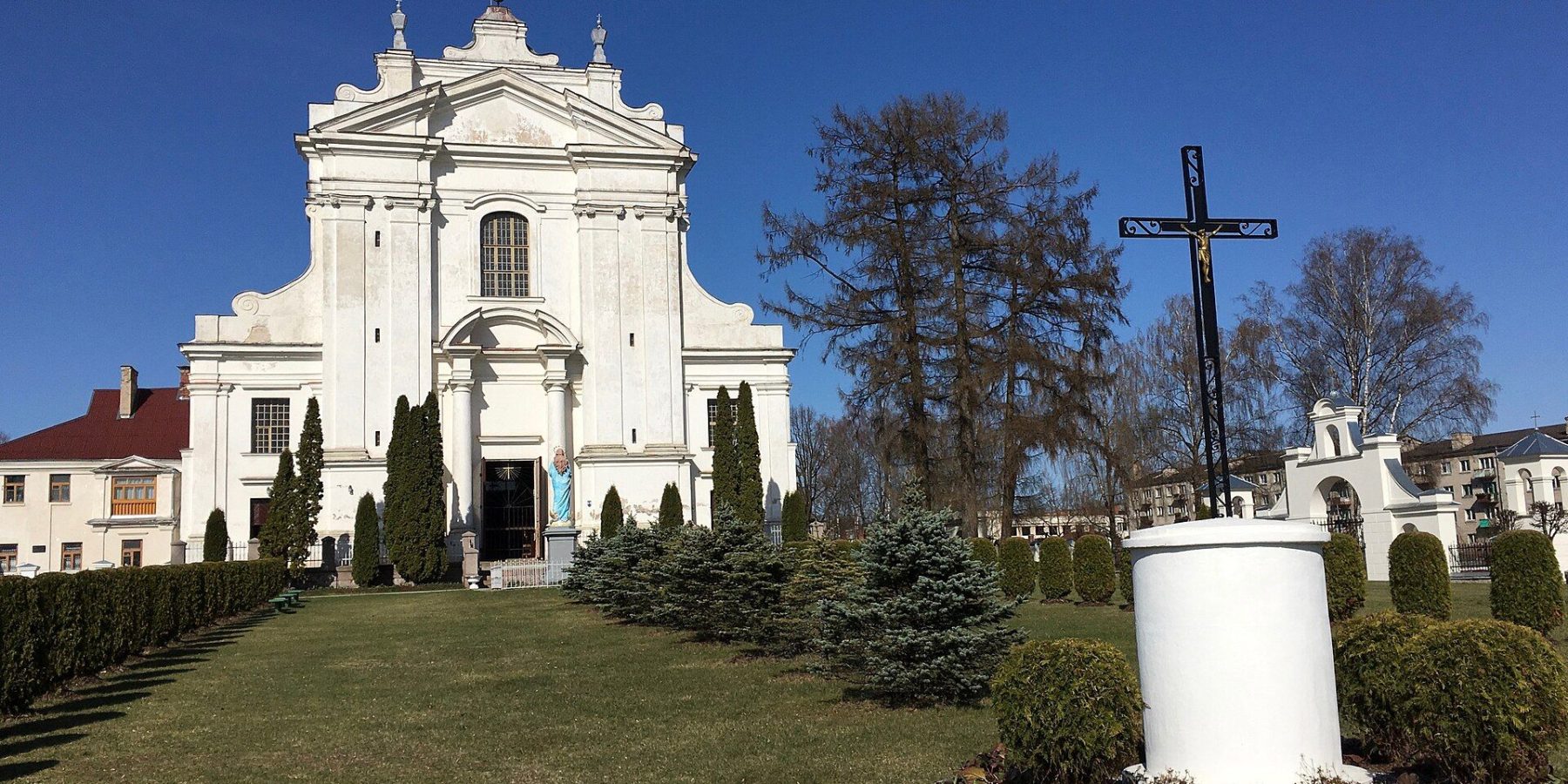
In the centre of Krāslava, near the banks of the Daugava, a white façade marks the finest example of Latgale’s Baroque — the Roman Catholic Church of St Louis (St Ludwig). It was built by the Counts Plater in the 18th century, its interior was painted by an Italian master, and the relics of St Donatus kept here make it Latgale’s second most important pilgrimage site after Aglona.
At a glance
| Confession | Roman Catholic (Diocese of Rēzekne-Aglona) |
| Built | 1755–1767; consecrated 1777 |
| Founder | Count Konstanty Ludwik Plater; works supervised by Antonio Paraka |
| Style | Baroque; Ionic order |
| Paintings | Frescoes by Filippo Castaldi (1760–1762) |
| Size | 42 × 26 m, 22 m high; architectural monument of national importance |
The Platers’ church that was meant to be a cathedral
Count Konstanty Ludwik Plater, owner of the Krāslava estate, built the church between 1755 and 1767 and dedicated it to St Louis — King Louis IX of France. It was intended to become the cathedral of the Bishopric of Inflanty (Livonia–Piltene), but after the First Partition of Poland–Lithuania in 1772 Krāslava passed to the Russian Empire and the plan came to nothing. The church was consecrated in 1777.
The Plater family crypt lies beneath the church, and portraits of the founders — Konstanty Ludwik Plater and his wife Augusta, née Ogińska — from the 1760s hang in the choirs. Countess Augusta funded a chapel in the east end. A separate bell tower was built in the churchyard in 1838; its bells are named “Ludvigs” (1787), “Donāts” (1853) and “Konrāds”.
Castaldi’s frescoes and the relics of St Donatus
In 1760–1762 the interior was painted by the Italian artist Filippo Castaldi (1730–1814). His work includes wall frescoes and illusionistic paintings on the main and side altars; the main altar shows a scene from St Louis’s crusade, with an archbishop blessing the king before he sets out.
A separate chapel holds the relics of the martyr St Donatus. In 1790, with the support of Pope Pius VI, a feast of St Donatus was established; it is held on the first Sunday after St Peter’s Day (29 June), when pilgrims from all over Latgale come to Krāslava. In summer 1941 the retreating Red Army set the church alight: the St Donatus altar and the organ burned, but parishioners put out the fire and saved the main altar and its painting.
Did you know?
In Latvian the church appears under two spellings — “Svētā Ludvika” and “Svētā Ludviga”. Both refer to the same saint: King Louis IX of France, who led two crusades in the 13th century.
Visiting
- Where: Baznīcas iela 2A, central Krāslava; about 45 km from Daugavpils on the A6.
- When: open 6:30–18:30 from May to September; hours may differ in other months. For guided visits call +371 65622201.
- Price: free entry; donations support the upkeep of the church.
- Etiquette: this is a working Catholic church — cover your shoulders, don’t walk around or take photos during Mass.
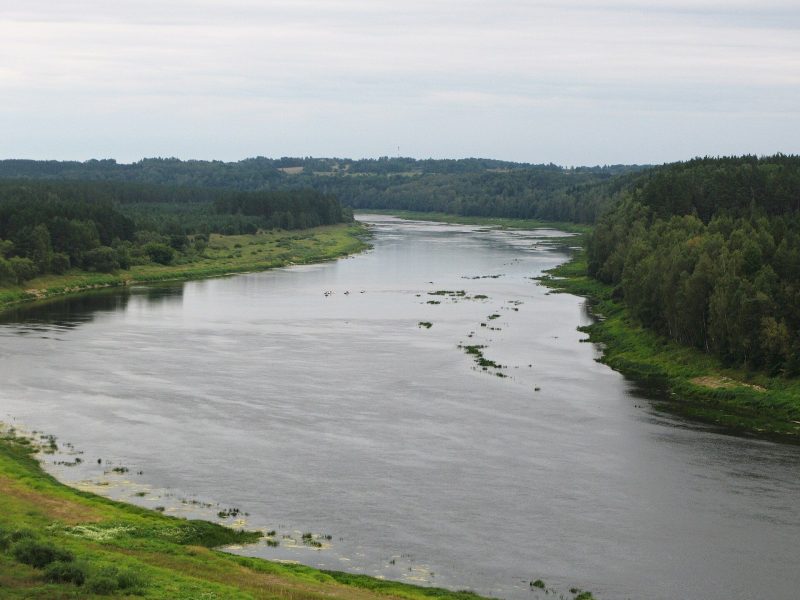
- Combine with: see the Daugava loops from the Vasargelišķi observation tower; another major pilgrimage site is Aglona Basilica, and for the nearest city see Things to do in Daugavpils.
FAQ
Is Krāslava’s church a cathedral?
No. It was planned as the cathedral of the Bishopric of Inflanty, but after 1772 that never happened; it is a parish church.
When is the feast of St Donatus?
On the first Sunday after St Peter’s Day (29 June). Look for the exact programme in parish or Krāslava municipality announcements.
Who painted the interior?
The Italian painter Filippo Castaldi, who worked here in 1760–1762.
Sources: latvia.travel; lv.wikipedia.org “Krāslavas Svētā Ludvika Romas katoļu baznīca”. Hours can change — check before you go.